

Introduction
Understanding Direct Mail Marketing
Direct mail marketing has long been a staple in the advertising world, serving as a powerful tool for businesses to reach potential customers. Unlike digital marketing, which often gets overshadowed by the latest online trends, direct mail allows companies to make a personal connection with recipients. This tangible form of marketing can evoke stronger emotional responses and encourage action by placing something physical in consumers’ hands.
When considering a direct mail campaign, it’s not just about slapping together a flyer or postcard. It involves strategic planning, creativity, and targeted messaging. For example, a local coffee shop might send out special promotions via beautifully designed postcards, enticing customers to visit their store.
Importance of Maximizing ROI
In today’s competitive market, simply launching a direct mail campaign isn’t enough. Maximizing return on investment (ROI) is crucial for ensuring that marketing dollars are spent wisely. Businesses need to analyze their direct mail efforts to determine what works and what doesn’t.
To maximize ROI, consider the following:
- Define Clear Goals : Are you aiming to increase brand awareness, drive sales, or promote a specific event?
- Target Audience : Ensure you are reaching the right audience, as this can significantly impact response rates.
- Measure Outcomes : Use tools like unique tracking codes to understand which elements of your campaign are performing well.
In essence, maximizing ROI with direct mail isn’t just a necessity; it’s a pathway to sustainable growth and success in marketing. When businesses accurately assess their campaigns, they can fine-tune their strategies and unlock even greater potential for engagement with their audience.

Setting Goals for Your Direct Mail Campaign
Defining Objectives
Setting clear objectives is paramount when launching a direct mail campaign. These objectives serve as the foundation for all subsequent efforts, guiding your strategy and keeping your team focused. Without well-defined goals, it can be easy to wander aimlessly, potentially wasting resources.
For instance, suppose a nonprofit organization aims to raise awareness about an upcoming fundraising event. Their objective might be: “Increase event attendance by 20% through direct mail invitations.” By outlining specific goals like this, they create a target to hit, helping them measure success later.
When defining objectives, consider these questions:
- What is the primary purpose of your campaign? (e.g., sales, brand awareness, customer retention)
- Who is your target audience?
- What timeline do you have for achieving these goals?
Establishing Key Performance Indicators (KPIs)
Once objectives are set, the next step is to establish Key Performance Indicators (KPIs). These measurable values will help you quantify the success of your direct mail campaign. KPIs give you concrete metrics to assess whether you are on track to meet your objectives.
Common KPIs for direct mail campaigns include:
- Response Rate : The percentage of recipients who took action, such as visiting a website or entering an offer.
- Conversion Rate : The percentage of responses that result in a desired action, like making a purchase or signing up for an event.
- Customer Acquisition Cost : The total cost of your campaign divided by the number of new customers gained.
By monitoring these KPIs, businesses can adjust strategies in real-time, ensuring a proactive approach that enhances overall campaign effectiveness. Setting clear objectives and KPIs is not just a bureaucratic exercise; it’s about paving the way for meaningful insights and better outcomes as your direct mail campaign unfolds.

Targeting the Right Audience
Segmenting Your Mailing List
After establishing clear objectives and KPIs, the next critical step in your direct mail campaign is targeting the right audience. A great way to do this is by segmenting your mailing list. Think of segmentation as creating smaller, more specific groups within your broader audience. This approach allows for tailored messages that resonate with various demographics.
For example, a fitness center might segment its mailing list into categories like:
- Current Members : Special offers or loyalty rewards.
- Lapsed Members : Re-engagement promotions to win them back.
- Prospective Members : Free trial passes or introductory discounts.
By tailoring messages to each segment, businesses can significantly increase response rates and engagement. Plus, it makes recipients feel seen and understood, rather than just another number on a list.
Personalizing Your Message
Following segmentation, the next step is to personalize your message. Personalization goes beyond simply adding a name to an envelope. It involves crafting messages that resonate with individual experiences and preferences.
You might consider including:
- Specific offers based on past purchases or engagement.
- Localized content that reflects community events or interests.
- Recommendations tailored to customer behavior, like reminding them of a class they showed interest in.
For instance, if a bookstore has a segment of young adults who frequently buy fantasy novels, sending them a tailored postcard featuring new releases in that genre can make all the difference.
Ultimately, by effectively segmenting your mailing list and personalizing your message, businesses can transform a generic message into a meaningful connection. This strategy not only enhances the customer experience but also drives higher conversion rates, making your direct mail campaign all the more successful.
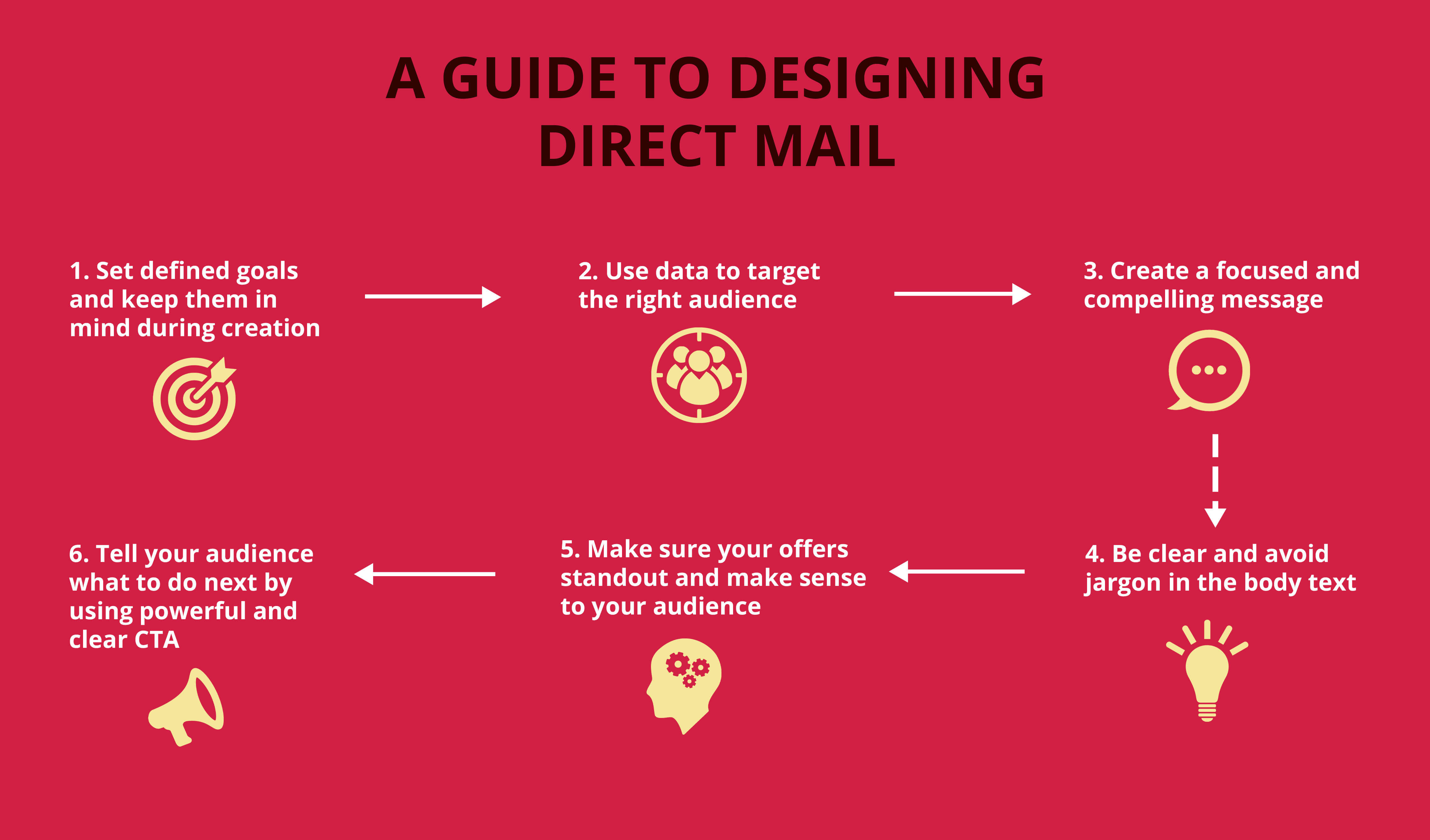
Designing Effective Direct Mail Pieces
Tips for Eye-Catching Designs
Now that you have effectively targeted your audience through segmentation and personalization, it’s time to focus on the design of your direct mail pieces. An eye-catching design is crucial, as it can make the difference between your mail being opened or tossed aside.
Here are some tips to ensure your design stands out:
- Use Bold Colors : Bright colors can grab attention, but ensure they align with your brand identity.
- High-Quality Images : Incorporate striking visuals or graphics that are relevant to your campaign. A crisp, colorful image can create a strong first impression.
- Clean Layout : Avoid clutter. Ensure plenty of white space around text and images to make the piece easy to read.
- Unique Shapes : Consider using unconventional shapes, like a rounded postcard or a tri-fold design, to make your piece memorable.
Personal anecdote: A friend of mine once received a beautifully designed postcard from a local art gallery. The vibrant colors and striking imagery on the card made her curious, prompting her to attend an exhibition she wouldn’t have considered otherwise.
Incorporating Compelling Copy
While design is critical, it’s the message that ultimately drives action. Incorporating compelling copy is essential to engage readers and motivate them to respond. Here are some ways to achieve this:
- Strong Headlines : Grab attention with a catchy, bold headline that speaks directly to your audience’s needs or desires.
- Clear Call to Action : Guide recipients on what to do next. Use direct language like “Visit us today!” or “Claim your offer now!”
- Storytelling : Share a brief story or testimonial that resonates with your audience, highlighting how your product or service can solve their problems.
For example, a local bakery might share a heartwarming story of how a customer found joy in celebrating special occasions with their cakes. This emotional connection can enhance the effectiveness of the promotion.
By combining eye-catching designs with compelling copy, your direct mail pieces can truly stand out, create a lasting impression, and ultimately drive customers to action.

Choosing the Right Direct Mail Format
Postcards vs. Letters
As you refine your direct mail campaign with stunning designs and compelling copy, the next essential decision is choosing the format. Two commonly used formats are postcards and letters, each with its distinct advantages.
Postcards are compact, visually engaging, and often elicit quicker reader responses due to their bold designs and straightforward messaging. They’re great for:
- Quick Announcements : Ideal for promotions, events, or special deals.
- High Visibility : Since the message is visible from the envelope, there’s no need for opening, increasing the likelihood of being read.
On the flip side, letters offer a more formal means of communication. They are particularly advantageous for:
- Personalized Messaging : A letter format allows for a warmer, more intimate connection as you can write a personalized note.
- Detailed Information : If your campaign requires more context—like a fundraising appeal or an in-depth explanation of a service—letters provide the necessary space.
For instance, a recent fundraising campaign for a nonprofit utilized letters to share heartfelt stories from beneficiaries, resulting in higher engagement compared to a previous postcard attempt.
Brochures vs. Catalogs vs. Flyers
When it comes to delivering more detailed information, brochures, catalogs, and flyers each serve unique purposes.
- Brochures : These are ideal when you want to provide concise information in a well-organized format. They typically unfold to reveal multiple panels, which can be handy for outlining features or services.
- Catalogs : If you have a vast range of products, catalogs are a fantastic choice. They allow ample space for product images and descriptions, giving potential customers a full view of what you offer.
- Flyers : Similar to postcards, flyers are versatile for advertising events, promotions, or new collections. They’re easy to distribute and can be impactful if designed effectively.
By carefully selecting the right format—whether it be postcards, letters, brochures, catalogs, or flyers—you position your message for optimal engagement and effectiveness. Remember, the right choice not only depends on your content but also aligns with your overall campaign goals and target audience preferences.

Printing and Production Process
Selecting High-Quality Materials
With your direct mail format in mind, the next phase of your campaign is the printing and production process. This is where the magic happens, transforming your creative ideas into tangible pieces. One of the most critical aspects of this step is selecting high-quality materials.
Using premium materials can significantly impact the perception of your brand. For instance:
- Paper Weight : Thicker paper feels more professional and durable. A business card printed on a heavier stock instantly conveys quality.
- Finish : Matte finishes provide a sophisticated touch, while glossy finishes can make images pop, offering a modern look.
- Eco-Friendly Options : More consumers are leaning towards sustainability. Consider using recycled paper or biodegradable materials to appeal to environmentally-conscious audiences.
A personal experience I had was when I received a beautifully printed brochure made from recycled paper. Not only was the design stunning, but the fact that it was eco-friendly made me more inclined to support the business behind it.
Working with Professional Printers
Choosing the right printer is equally essential in this process. Working with professional printers can elevate your direct mail campaign, ensuring that the final product meets your expectations.
Here are some factors to consider when selecting a printer:
- Portfolio : Review their previous work to gauge the quality and creativity of their projects.
- Customer Service : Look for printers who offer excellent communication and support throughout the process; this can save you time and headaches.
- Turnaround Time : Ensure that the printer can meet your deadlines without compromising quality.
In my experience, collaborating with a professional printer who understood my vision led to outstanding results for my last campaign. They offered valuable insights on material choices and even suggested design tweaks that enhanced readability.
By investing in both high-quality materials and skilled printers, you set the stage for a polished and effective direct mail campaign that truly resonates with your audience. As the saying goes, “You never get a second chance to make a first impression,” and this holds especially true in direct mail marketing.
Tracking and Analyzing Results
Implementing Unique Tracking Codes
As your direct mail pieces hit the mailboxes, it’s time to think about tracking and analyzing the results of your campaign. One efficient way to do this is by implementing unique tracking codes. These codes provide valuable data points that allow you to measure the effectiveness of your efforts.
By using different tracking codes for various pieces or segments, you can:
- Identify Performance : See which specific mailers generated the most responses. For example, if you send out two postcard designs with different codes, you can easily compare which one resonated better with your audience.
- Monitor Engagement : Track online behaviors, such as visits to your website or redemption of offers linked to those codes.
- Optimize Future Campaigns : Use the insights gained to refine your approach on upcoming campaigns based on what worked best.
In a previous campaign I led for a local arts festival, we incorporated unique codes on our direct mail pieces that directed recipients to an event registration page. This simple step helped us determine exactly how many attendees came as a result of our mailing, allowing us to calculate ROI accurately.
Analyzing Response Rates
Once the campaign concludes, the next step is analyzing the response rates. This is where the rubber meets the road, and understanding the effectiveness of your direct mail strategy becomes critical.
Key metrics to focus on include:
- Response Rate : This is the percentage of recipients who took the desired action (like visiting your website or making a purchase). You can calculate it by dividing the number of responses by the total number of pieces sent.
- Conversion Rate : After tracking responses, measure how many of those responses resulted in actual sales or engagements.
- Customer Acquisition Cost (CAC) : This metric helps assess how much you spent to gain a new customer and whether that aligns with your expected ROI.
By analyzing response rates and other metrics, you gain insights that can inform your next campaign, leading to continuous improvement. For instance, if data showed a higher conversion rate from a specific target segment, you might want to focus more on that group in future campaigns.
Utilizing unique tracking codes and diligently analyzing response rates provides the essential feedback loop needed to enhance direct mail effectiveness and boost overall marketing success. This data-driven approach not only leads to smarter decision-making but fosters confidence in future marketing efforts.

Optimizing Your Direct Mail Campaign
A/B Testing Strategies
With valuable data on tracking and analyzing results in hand, it’s time to focus on optimizing your direct mail campaign for even better outcomes. One powerful method to achieve this is through A/B testing strategies. This approach allows you to compare two variations of a direct mail piece to determine which one performs better.
To implement A/B testing effectively, you can:
- Choose a Variable : Decide what aspect you want to test, such as the headline, call to action, or imagery. For example, you might consider sending one version of a flyer with a bold headline and another with a subtle, more descriptive headline.
- Segment Your Audience : Randomly split your mailing list, ensuring that each group is similar in demographics and size. This helps ensure that your results are statistically significant.
- Measure Outcomes : After sending out both versions, analyze the response rates and feedback. Focus on conversion rates to determine which piece drives more action.
In a past campaign for a local gym, we conducted A/B testing on two different postcard designs. One card included a special introductory offer, while the other focused on client testimonials. Surprisingly, the testimonial card generated a higher response, revealing the potential power of social proof in marketing.
Implementing Feedback for Improvement
In addition to A/B testing, actively implementing feedback is essential for ongoing improvement in future campaigns. Don’t shy away from asking for input from your audience, team members, or even stakeholders.
Here are some strategies for gathering and using feedback effectively:
- Surveys : Include a QR code or link in your mail piece that leads recipients to a quick survey about what they liked or didn’t like.
- Direct Outreach : Follow up with customers who responded to the campaign for insights on their experience and expectations.
- Review Responses : Analyze the feedback to identify common themes or areas for improvement. If several recipients mention they found the offer confusing, it may need to be simplified.
In my experience, integrating feedback into future campaigns significantly enhanced their effectiveness and alignment with customer needs. Each iteration becomes better informed, leading to more successful direct mail strategies.
By utilizing A/B testing and actively implementing feedback, businesses can continually fine-tune their direct mail efforts, ultimately driving greater engagement and success. This iterative approach transforms each campaign into a learning opportunity, ensuring growth and relevance in an ever-evolving marketplace.