

Understand the Role of an Email Marketing Specialist
Responsibilities and Duties
An Email Marketing Specialist plays a pivotal role in the digital marketing landscape, focusing on developing strategies to engage customers via email. This professional’s responsibilities are diverse and integral to driving business growth. Here are some of their primary duties:
- Campaign Planning : Creating targeted email marketing campaigns based on customer segmentation and behavior analytics.
- Content Creation : Crafting compelling email copy and designing eye-catching visuals that resonate with the audience.
- List Management : Organizing email lists to ensure high deliverability and engagement, including maintaining the integrity of subscriber data.
- Performance Tracking : Analyzing campaign performance and metrics to continuously refine and optimize email strategies.
Required Skills and Qualifications
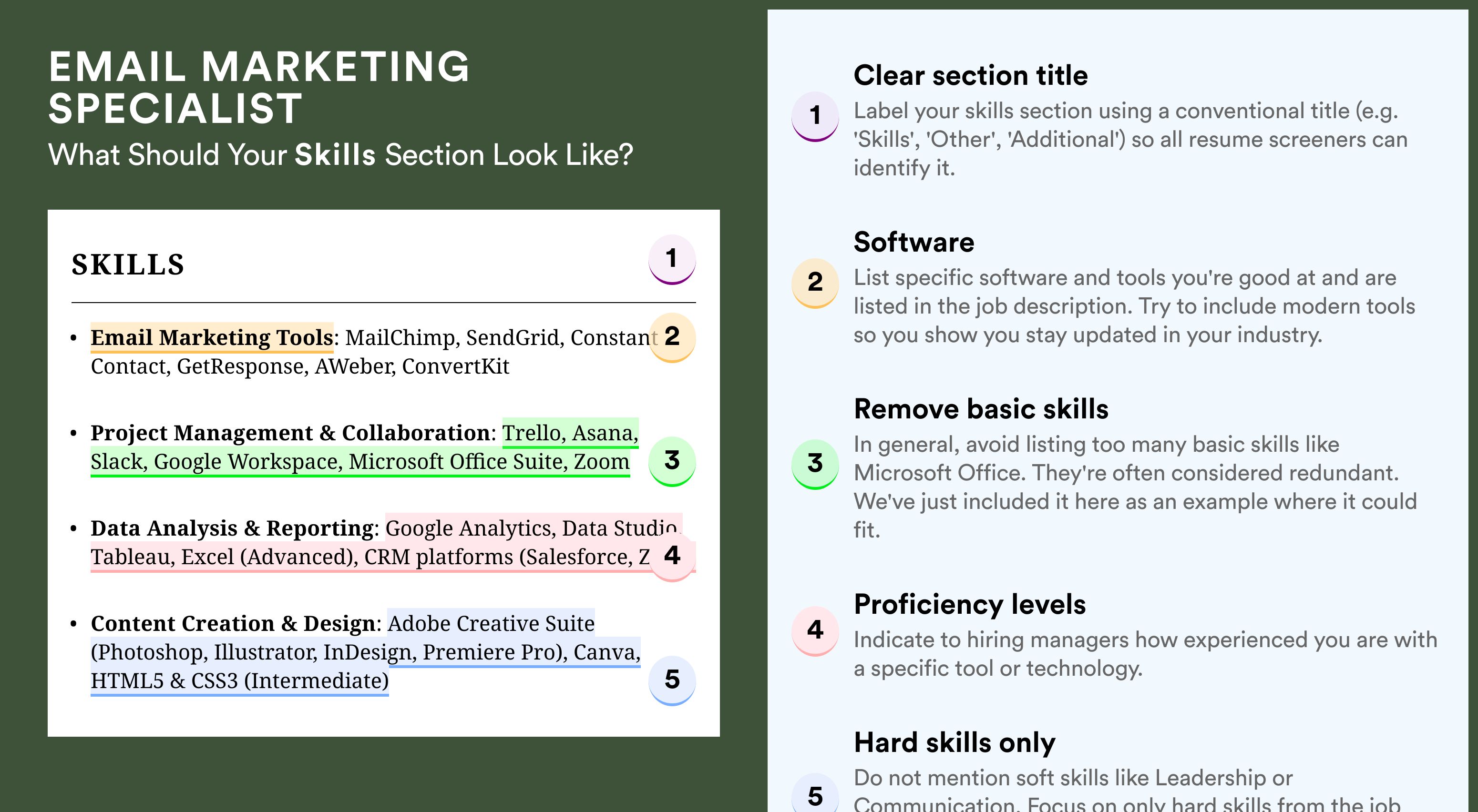
To succeed as an Email Marketing Specialist, certain skills and qualifications are essential. For instance, familiarity with email design software and CRM systems can set a candidate apart. Here are key attributes that prospective specialists should possess:
- Technical Skills : Proficiency in email marketing tools (like Mailchimp or HubSpot) and CRM platforms.
- Data Analysis : Ability to interpret data such as open rates and click-through rates to make data-driven decisions.
- Copywriting : Knowledge of persuasive writing techniques to enhance open rates and customer engagement.
- Creative Thinking : Innovative approaches to target different audience segments effectively.
In essence, a combination of strategic planning, creativity, and data analysis is crucial for an Email Marketing Specialist to thrive in this dynamic field.
Building a Strong Email Marketing Specialist Resume
Crafting a Targeted Resume
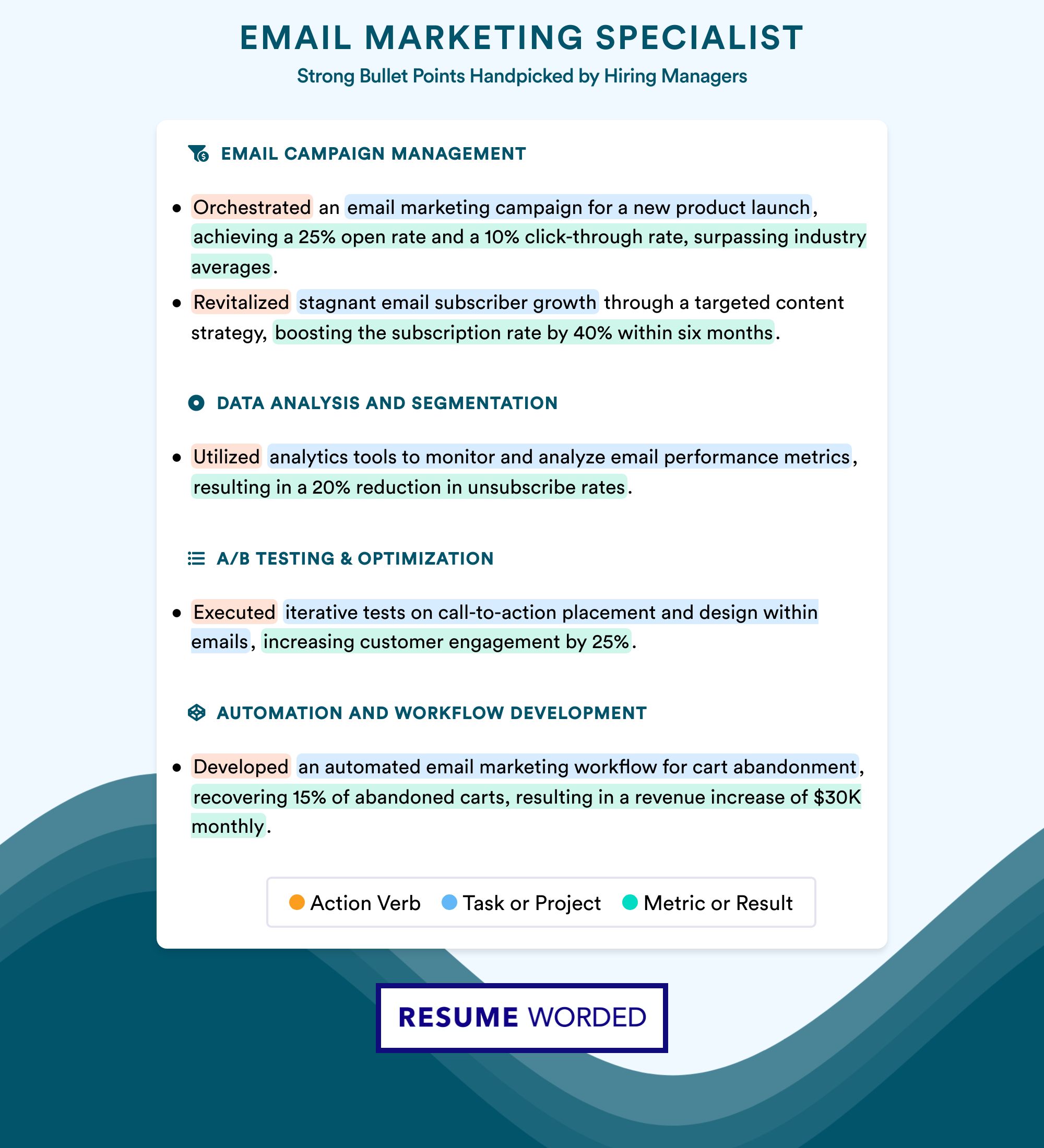
When it comes to landing an Email Marketing Specialist position, crafting a targeted resume can make all the difference. Unlike a generic resume, a targeted one speaks directly to the job description and highlights the skills and experiences that are most relevant. Here are some tips to tailor your resume effectively:
- Analyze Job Descriptions : Take the time to read through multiple job postings. Note the keywords and skills that frequently appear.
- Customize Your Summary : Start with a strong summary that reflects your email marketing expertise, using relevant terminology from the job listing.
- Use Specific Examples : Quantify your achievements, such as “Increased open rates by 30% through optimized subject lines.”
Highlighting Relevant Experience
Next, it’s crucial to highlight your relevant experience. This doesn’t just mean listing past jobs; instead, emphasize roles that directly relate to email marketing. Here’s how to effectively showcase this experience:
- Job Titles and Companies : Include positions that involve email marketing, even if they weren’t your primary focus.
- Key Accomplishments : Use bullet points to detail significant contributions, like “Designed an automated email workflow that led to a 15% upsell increase.”
- Training and Certifications : Don’t forget to mention any training programs or certifications in email marketing, demonstrating your commitment to professional growth.
By thoughtfully crafting a targeted resume and emphasizing relevant experience, candidates can significantly enhance their chances of standing out in a competitive job market.
Mastering Email Marketing Tools and Software
Understanding CRM Systems
Mastering email marketing tools and software is crucial for any aspiring Email Marketing Specialist. A solid understanding of Customer Relationship Management (CRM) systems can be a game-changer in how you manage customer interactions and data. These platforms help you centralize information about your subscribers and enable you to tailor your marketing efforts effectively.
- Key Features to Look For :
- Segmentation : This allows you to categorize subscribers based on various criteria, making targeted campaigns more effective.
- Data Tracking : A good CRM maintains a record of user interactions, which can be invaluable for analyzing customer behavior.
- Integration : Ensure it can seamlessly connect with your email automation tools to streamline your workflow.
Familiarizing with Email Automation Platforms
Equally important is getting comfortable with email automation platforms. These tools simplify the process of sending personalized messages to subscribers.
- Benefits of Email Automation :
- Time-Saving : Automating routine tasks frees you up for more strategic planning and creative content development.
- Personalization : Use automation to send varied messages based on subscriber actions, like welcome emails for new users or follow-ups for cart abandonments.
- Analytics : Most platforms offer robust reporting features, allowing you to gauge the performance of your campaigns.
For instance, during one of my early projects, I leveraged an automation tool to set up a drip campaign for new subscribers, resulting in a 25% increase in user engagement. This experience exemplifies how mastering the right tools can elevate your email marketing efforts and ultimately lead to more successful campaigns.
Creating Effective Email Campaigns
Segmentation and Targeting
Once you’ve mastered the tools at your disposal, it’s time to focus on creating effective email campaigns. A crucial step in this process is segmentation and targeting. This means dividing your email list into smaller groups based on specific criteria such as demographics, purchase history, or engagement levels.
- Why Segmentation Matters :
- Increased Relevance : Sending tailored messages ensures that your content resonates with the recipient, leading to higher engagement rates.
- Improved ROI : Targeted campaigns typically generate better conversion rates, as they meet the specific needs of your audience.
For example, during my recent campaign for an e-commerce platform, we segmented our list into categories based on past purchases, allowing us to send personalized recommendations that resulted in a significant spike in sales.
Email Copywriting Best Practices
Next comes the art of email copywriting, which is just as vital to your campaign’s success. Crafting engaging copy that compels the reader to take action can be tricky, but following some best practices can help.
- Tips for Writing Compelling Emails :
- Strong Subject Lines : Capture attention by using clear, intriguing subject lines that encourage recipients to open the email.
- Personalization : Use the subscriber’s name and tailor content to their interests to create a more personal touch.
- Clear Call-to-Action (CTA) : Include a strong CTA that tells the reader exactly what to do next, whether it’s making a purchase or visiting a webpage.
An experience I had illustrates this perfectly: after testing various subject lines, a simple yet intriguing option led to a 40% increase in open rates. By mastering these elements of segmentation and copywriting, marketers can create campaigns that truly resonate and drive results.
Analyzing Email Marketing Performance
Key Metrics to Track
To ensure your email marketing campaigns are effective, analyzing performance is essential. By monitoring key metrics, you can gain valuable insights into how well your campaigns are resonating with your audience. Here are some critical metrics every Email Marketing Specialist should keep an eye on:
- Open Rates : This tells you how many recipients opened your email, indicating how successful your subject line was.
- Click-Through Rates (CTR) : Track the percentage of recipients who clicked on a link within your email – a crucial indicator of engagement.
- Conversion Rates : Ultimately, how many recipients took the desired action (like making a purchase) after clicking through your email.
- Unsubscribe Rates : Understanding why individuals choose to opt-out can help refine your targeting and content strategies.
During a campaign I managed, we noticed our open rates were declining. By analyzing subject lines and experimenting with different approaches, we successfully boosted our rates by 20%!
Improving Campaign ROI
Tracking metrics is just the beginning; the goal is to improve your campaign’s return on investment (ROI). If your campaigns aren’t generating the expected returns, consider the following strategies:
- A/B Testing : Regularly test different versions of your emails to identify which elements resonate better with your audience, be it subject lines, images, or CTAs.
- Refine Segmentation : Continuously refine your audience segments to ensure your messages are relevant and personalized.
- Optimize Sending Times : Research shows that different audiences may engage better at specific times; testing send times can significantly increase open and click rates.
Through these strategies, I once improved a campaign’s ROI by nearly 30%, demonstrating the power of informed adjustments. By consistently analyzing performance and implementing changes, Email Marketing Specialists can maximize their impact and drive better results.
Knowledge of Email Compliance Regulations
GDPR and CAN-SPAM Act
In the realm of email marketing, compliance with regulations is not just essential; it’s a legal obligation. Two of the most significant regulations to be aware of are the General Data Protection Regulation (GDPR) and the CAN-SPAM Act. Understanding these laws is critical for maintaining trust and legal safety.
- GDPR : This European regulation emphasizes data protection and privacy. Key points include:
- Consent : Businesses must obtain explicit consent from users before sending marketing emails.
- Data Rights : Subscribers have the right to access, rectify, or erase their data at any time.
- CAN-SPAM Act : This U.S. law sets the standards for commercial emails. Key aspects include:
- Clear Identification : Emails must clearly identify the sender.
- Opt-Out Option : Every email must include an easy way for recipients to unsubscribe.
In my experience applying these regulations in campaigns, ensuring clear consent increased our subscribers’ trust and engagement.
Opt-In Practices
Opt-in practices go hand-in-hand with compliance regulations and are vital for building a healthy email list. Implementing effective opt-in strategies will not only keep you compliant but also encourage genuine interest among your subscribers.
- Types of Opt-Ins :
- Single Opt-In : Users provide their email address and are added to the list directly.
- Double Opt-In : Users must confirm their subscription via a follow-up email, ensuring they truly want to receive communications.
From my personal experience, using double opt-in significantly improved the quality of my email list. While it may take more time initially, the benefit of having highly engaged recipients pays off in the long run.
By understanding and implementing these compliance regulations and best opt-in practices, Email Marketing Specialists can foster trust while enhancing their overall email campaign effectiveness.

Building a Portfolio of Email Marketing Projects
Showcasing Work Samples
Creating a strong portfolio is essential for any Email Marketing Specialist looking to demonstrate their skills and attract potential employers or clients. Work samples are the backbone of your portfolio, allowing you to showcase your ability to craft effective email campaigns.
- What to Include :
- Diverse Campaigns : Feature various types of emails, such as newsletters, promotional offers, and customer retention campaigns.
- Design Elements : Include examples that highlight your design skills, showcasing visually appealing templates.
- Performance Metrics : Whenever possible, incorporate metrics like open rates, click-through rates, and conversion rates to illustrate the success of your campaigns.
During my career, I created a portfolio that included diverse examples, which helped me land several freelance projects.
Case Studies and Success Stories
In addition to work samples, case studies and success stories add depth to your portfolio. They allow you to explain not just what you did, but also the impact of your work.
- Key Components of a Case Study :
- Challenge : Describe the problem or goal you faced.
- Solution : Explain the strategies you implemented, such as segmentation techniques or unique copywriting approaches.
- Results : Share quantifiable outcomes to emphasize your impact, like increased engagement or revenue growth.
For instance, I once turned around a struggling email campaign that had a low open rate by testing various subject lines and optimizing the send times. The result was a 50% increase in engagement, and sharing this success story helped showcase my problem-solving skills.
By thoughtfully curating work samples and case studies, an Email Marketing Specialist can craft a compelling portfolio that not only highlights their skills but also tells a story of their professional journey.
Networking and Job Search Strategies
Utilizing LinkedIn and Online Job Boards
In the competitive field of email marketing, networking and effective job search strategies can significantly enhance your prospects. Starting with platforms like LinkedIn and various online job boards is essential.
- Creating an Engaging LinkedIn Profile :
- Highlight Your Skills : Use relevant keywords like “Email Marketing Specialist” in your profile to improve discoverability.
- Showcase Your Portfolio : Upload examples of your best work to demonstrate your capabilities visually.
- Engage with Content : Share articles related to email marketing trends or insights. This positions you as an informed professional in the field.
When I began my job search, engaging with content on LinkedIn helped me connect with industry leaders and discover job openings that weren’t advertised elsewhere.
Connecting with Industry Professionals
Beyond online platforms, forming personal connections with industry professionals can open doors that you might not expect. Networking isn’t just about collecting contacts; it’s about building meaningful relationships.
- Attend Industry Events : Look for webinars, conferences, or workshops related to email marketing. These gatherings offer opportunities to meet like-minded professionals.
- Join Relevant Groups : Participate in online communities or forums dedicated to email marketing where you can ask for advice and share experiences.
During one industry conference, I met a senior marketing executive who later became a mentor and valuable contact. This connection led to freelance opportunities and introductions to potential clients.
By leveraging LinkedIn and actively networking with industry professionals, Email Marketing Specialists can create a robust support system, enhancing both their job search and professional growth.
Preparing for Email Marketing Specialist Interviews
Common Interview Questions
When preparing for an Email Marketing Specialist interview, it’s crucial to anticipate common questions that interviewers may ask. These questions often aim to gauge your technical skills, problem-solving abilities, and overall understanding of email marketing strategies. Here are a few you might encounter:
- “What metrics do you consider most important in your email campaigns?” This question assesses your analytical skills and knowledge of performance indicators.
- “How do you ensure that your emails comply with regulations like GDPR and CAN-SPAM?” Here, you demonstrate your understanding of legal standards.
- “Can you share an example of a campaign that didn’t perform well and what you did to improve it?” This allows you to showcase your ability to learn from challenges.
Reflecting on my own interview experiences, preparing detailed answers to such questions helped boost my confidence and showcase my expertise effectively.
Demonstrating Industry Knowledge
In addition to answering questions, demonstrating your industry knowledge can set you apart from other candidates. To do this, stay informed about the latest trends and best practices in email marketing. Here’s how you can showcase your expertise:
- Discuss Current Trends : Be prepared to talk about new email marketing techniques, such as personalization and automation.
- Share Recent Case Studies : Reference successful campaigns or case studies that illustrate effective strategies the company can adopt.
- Engage in Conversations : Show enthusiasm for the role by asking insightful questions regarding the company’s email marketing strategies.
During one of my interviews, I shared insights on the latest personalization trends and how they can enhance customer engagement. This not only impressed the interviewers but also demonstrated my commitment to continuous learning in the field.
By preparing for common questions and showcasing your industry knowledge, you can approach your Email Marketing Specialist interview with confidence, making a strong impression on potential employers.

Professional Development and Continuous Learning
Staying Updated on Trends
In the fast-paced world of email marketing, continuous learning and professional development are key to staying ahead. The landscape changes rapidly, with new tools, techniques, and regulations constantly emerging. Thus, staying updated on the latest trends is essential for any Email Marketing Specialist.
- Subscribe to Industry Newsletters : Consider signing up for newsletters from reputable marketing organizations and blogs. Some favorites include MarketingProfs and HubSpot, offering insights into emerging trends and strategies.
- Follow Thought Leaders : Engage with thought leaders and industry experts on social media platforms like LinkedIn and Twitter. Their posts often provide real-time updates on best practices.
- Join Forums and Groups : Participating in email marketing forums can offer peer support and the sharing of resources.
In my journey, regularly reading industry news has helped me adapt my strategies effectively, such as incorporating new personalization techniques that increased engagement.
Pursuing Certifications and Courses
Another great way to enhance your expertise is by pursuing certifications and courses. These credentials not only boost your resume but also expose you to advanced topics and in-depth knowledge.
- Popular Certifications :
- HubSpot Email Marketing Certification : A comprehensive program covering best practices and analytics.
- Google Analytics Certification : Understanding analytics can help you track campaign performance better.
- American Marketing Association (AMA) Certifications : Various options related to email marketing and digital strategies.
I personally took the HubSpot certification course, and the structured knowledge I gained helped refine my campaigns significantly.
By making a commitment to professional development through continuous learning and course participation, Email Marketing Specialists can not only enhance their skills but also maintain a competitive edge in this dynamic field.