Introduction
Overview of Inbound Email Strategies
As businesses navigate the evolving landscape of digital marketing, inbound email strategies have emerged as a pivotal component in establishing meaningful connections with customers. Rather than pushing their messages aggressively, companies adopting inbound email marketing aim to create value for their audience.
Imagine receiving an email that not only addresses your specific needs but also offers insightful content relevant to your interests. This approach is at the heart of inbound email strategies, effectively converting casual readers into engaged customers.
Key elements of successful inbound email strategies include:
- Targeted Messaging : Crafting messages tailored to reflect the recipient’s interests and behaviors.
- Opt-In Permission : Building a loyal audience by ensuring that only those genuinely interested in your offerings receive your communications.
- Valuable Content : Providing substantial value through useful articles, tips, and exclusive offers, rather than solely promotional messages.
By focusing on these essential elements, businesses can cultivate a deeper connection with their audience and enhance engagement rates.
Importance of Salesforce Marketing Cloud
Amidst the proliferation of digital tools available for marketers, Salesforce Marketing Cloud stands out as a robust platform that can take inbound email strategies to the next level. Its comprehensive features enable businesses to automate their email campaigns, track performance, and effectively analyze audience data.
Consider this: A small business owner, Jane, used Salesforce Marketing Cloud to streamline her email marketing efforts. By utilizing its powerful segmentation tools, she was able to segment her audience based on purchase history and engagement levels. This allowed her to send tailored content that resonated with her audience, resulting in an impressive increase in open rates and conversions.
Key benefits of utilizing Salesforce Marketing Cloud include:
- Data-Driven Insights : Access to real-time analytics that inform strategy adjustments.
- Integration Capabilities : Seamless integration with other Salesforce tools and third-party platforms.
- Automation Features : Tools that simplify campaign management, reducing time spent on manual tasks.
By leveraging Salesforce Marketing Cloud, businesses can not only enhance their inbound email strategies but also drive successful marketing campaigns that resonate with their audience.
Understanding Inbound Email Marketing
Benefits of Inbound Email Marketing
Diving deeper into the realm of inbound email marketing reveals a treasure trove of benefits that can significantly enhance a business’s overall marketing strategy. At its core, inbound email marketing revolves around attracting customers through valuable content and anticipating their needs.
Let’s think back to Jane, the small business owner we mentioned previously. After implementing inbound strategies in her email campaigns, she noticed several key advantages:
- Higher Engagement Rates : By sending relevant content, Jane’s email open rates skyrocketed. She discovered that when she shared helpful resources, her audience was eager to engage.
- Cost-Effectiveness : Unlike traditional advertising methods, email marketing is relatively inexpensive. Jane found that she could reach her audience without a heavy investment, making it ideal for her small business budget.
- Improved Customer Relationships : The more Jane focused on personalized communication, the stronger her bonds with customers became. She received positive feedback and loyalty from customers who appreciated the effort she put into her newsletters.
- Data-Driven Decisions : By analyzing the performance of her email campaigns, Jane adjusted her strategies based on metrics such as click-through rates and audience interactions.
Key Components of Inbound Email Strategies
As you explore inbound email marketing further, it’s crucial to understand the foundational components that drive success. Here are some key elements every effective inbound strategy should have:
- Segmentation : Dividing your email list into specific groups based on criteria such as demographics or buying behavior. This allows for tailored messaging that resonates with distinct audiences.
- Personalization : Crafting emails that address the recipient by name and reflect their preferences or past interactions. Personalized emails can lead to a much higher engagement rate than generic messages.
- Automation : Utilizing tools (like Salesforce Marketing Cloud) to automate sending targeted emails at optimal times. Automation helps maintain engagement without requiring constant manual effort.
- Content Value : Ensuring each email provides meaningful content, whether informative articles, downloadable resources, or exclusive offers. Adding value keeps subscribers interested and fosters loyalty.
By harnessing these components, marketers can effectively build a successful inbound email marketing strategy, much like Jane did, leading to greater business growth and customer satisfaction.
Utilizing Salesforce Marketing Cloud
Features of Salesforce Marketing Cloud
As businesses look to leverage more sophisticated tools for their marketing efforts, Salesforce Marketing Cloud has become a go-to platform for many. Its extensive suite of features empowers marketers to execute and optimize their inbound email strategies effectively.
Imagine Jane, again—this time, she’s exploring the various features Salesforce offers. Here are some standout capabilities that caught her eye:
- Email Studio : This feature allows for creative and personalized email design, making it easy to create visually appealing templates that capture the audience’s attention.
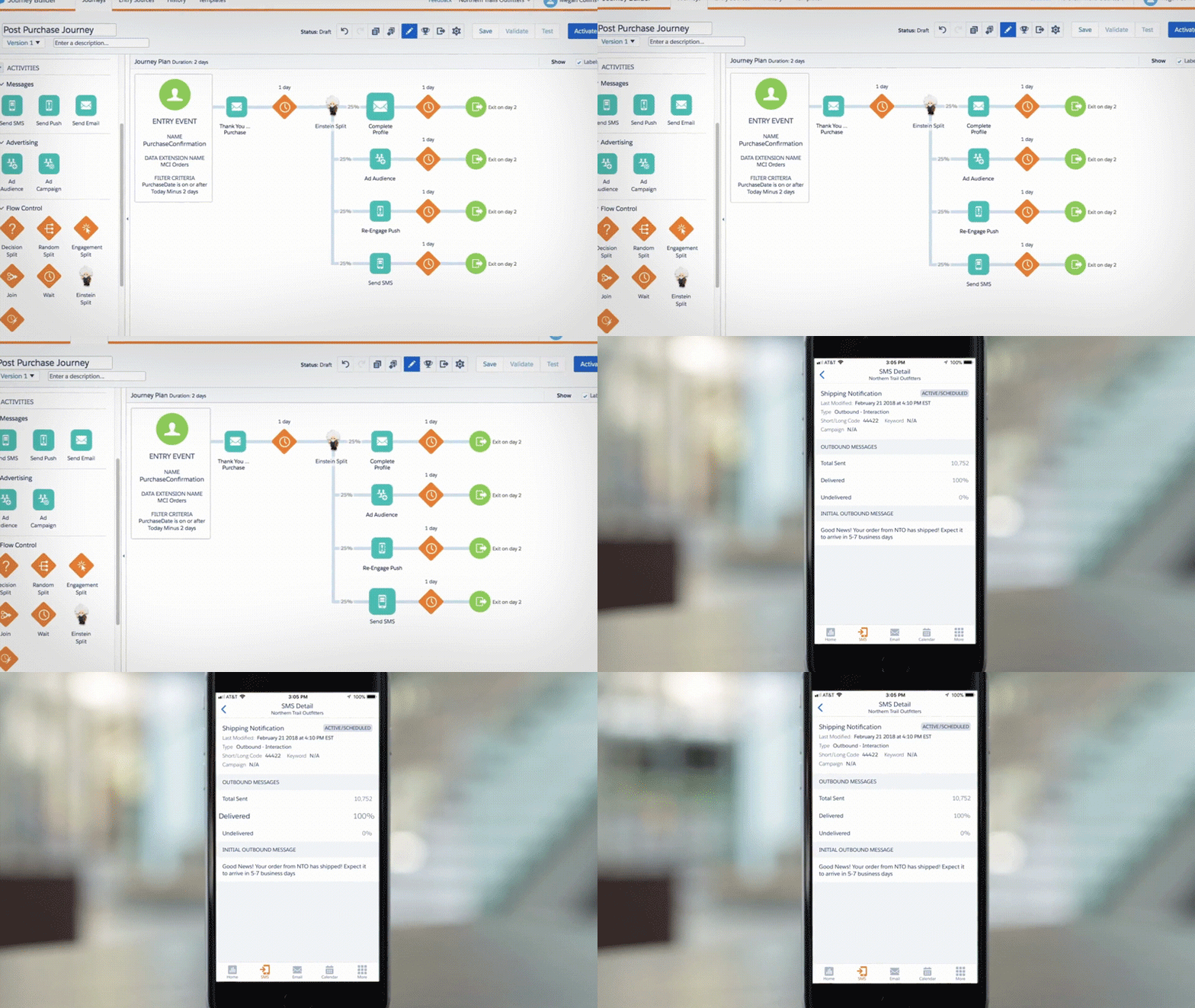
- Journey Builder : This tool enables marketers to visualize the customer journey, allowing Jane to map out touchpoints and ensure she sends the right message at the right time.
- Audience Segmentation : With advanced segmentation options, Jane could categorize her audience into dynamic lists based on behaviors and preferences, leading to targeted and effective messaging.
- Automation Studio : Automating her email workflows saved Jane countless hours. She could schedule emails or trigger them based on user actions, enhancing engagement without scrambling for time.
- Analytics and Reporting : Real-time performance metrics allowed Jane to gauge the effectiveness of her campaigns instantly and make data-driven decisions.
Integration with Inbound Email Strategies
However, the beauty of Salesforce Marketing Cloud isn’t just in its features but also in how seamlessly it integrates with inbound email strategies. By aligning the platform’s capabilities with her marketing goals, Jane experienced remarkable results.
Here’s how Salesforce Marketing Cloud enhances inbound strategies:
- Personalization at Scale : By leveraging customer data, Jane could personalize emails on a larger scale than ever before. When she segmented her audience and combined that with automated content, engagement skyrocketed.
- Targeted Campaigns : With the segmentation tools, Jane could quickly identify segments that needed specific attention, allowing her to tailor messages that spoke directly to their needs and interests.
- Continuous Feedback Loop : The analytics features provided insights that helped Jane refine her strategies. By analyzing open rates and engagement responses, she could adjust her future email content and timing, ensuring better performance with every campaign.
By integrating Salesforce Marketing Cloud with her inbound email strategies, Jane transformed her entire marketing landscape, creating a more effective, personalized, and efficient approach that connected her closely with her customers.

Creating Targeted Email Campaigns
Segmenting Your Audience
To truly harness the power of email marketing, creating targeted campaigns involves a few crucial steps, with audience segmentation sitting at the forefront. Segmenting your audience is akin to tailoring a suit; it ensures that the messaging fits perfectly to each recipient’s preferences and behavior.
For Jane, this revelation simplified her marketing strategy immensely. Here’s how she approached audience segmentation:
- Demographic Information : Jane created segments based on age, gender, and location. For example, promotions for her local shop could focus on customers within a specific zip code, enhancing relevance.
- Behavioral Data : By examining past purchase behaviors, Jane identified customers who regularly bought a particular type of product and tailored her messaging accordingly. This way, she could promote complementary products to them effectively.
- Engagement Levels : Jane split her audience based on their interactions with previous emails. Engaged users received exclusive offers, while less-active subscribers got incentives to re-engage.
This targeted segmentation allowed her to send tailored campaigns that resonated with different audiences, significantly improving open and click-through rates.
Personalizing Email Content
Once Jane established her segments, she moved on to one of the most impactful elements of email marketing: personalization. Gone are the days of generic, one-size-fits-all emails; today, personalized content is essential to capturing readers’ attention.
Jane employed several strategies to personalize her emails:
- Dynamic Content Blocks : She used Salesforce Marketing Cloud to insert dynamic content tailored to each segment. For instance, regular purchasers received emails highlighting new arrivals related to their interests, while first-time buyers received introductory offers.
- Personalized Subject Lines : To improve open rates, Jane crafted subject lines that included the recipient’s name. This simple approach created a sense of belonging and urgency, prompting readers to click.
- Tailored Recommendations : Utilizing past purchase data, Jane included product recommendations in her emails. By suggesting items based on what her customers had already shown interest in, she experienced higher conversion rates.
Through consistent efforts in segmenting her audience and personalizing content, Jane was able to create targeted email campaigns that not only captured her audience’s attention but also fostered deeper connections, driving both engagement and sales.

Optimizing Email Performance
A/B Testing Strategies
Now that Jane had implemented segmentation and personalization in her email campaigns, the next step was fine-tuning those efforts to drive even better performance. This is where A/B testing comes into play. A/B testing, also known as split testing, allows marketers to compare two variations of an email to identify which performs better.
For Jane, A/B testing became a crucial tool in her optimization toolkit. Here’s how she approached it:
- Subject Lines : Jane experimented with different subject lines to see which ones prompted more opens. For instance, she tested a straightforward approach versus a more playful, curiosity-driven line. This helped her discover that her audience responded better to playful, engaging subjects.
- Call to Action (CTA) : She created two versions of an email with different CTAs—one with “Shop Now” and another with “Discover Your Favorites.” By tracking which version led to higher click-through rates, Jane could optimize her future campaigns accordingly.
- Send Times : Jane also tested various send times. She divided her audience into groups—some received emails in the morning, while others got them in the evening. By analyzing engagement rates, she could pinpoint the optimal time to reach her subscribers.
Through these strategies, Jane was able to continuously refine her campaigns, ensuring each email resonated with her audience and yielded better results.
Analyzing Email Metrics
Once Jane implemented her A/B tests, the next natural step was to dive into the data and analyze email metrics. Understanding email performance isn’t just about looking at surface-level numbers; it’s about deriving actionable insights that inform future strategies.
Here are key metrics Jane monitored:
- Open Rates : This metric indicates how many recipients opened her emails. A low open rate could signal the need for more engaging subject lines or better timing.
- Click-Through Rates (CTR) : Jane evaluated how many recipients clicked on the links within her emails. A high CTR suggested that her content and CTAs resonated well with her audience.
- Conversion Rates : This is where the magic happens—how many of those clicks resulted in desired actions, like purchases or sign-ups. Jane learned to adjust her email’s layout or offerings based on conversion data.
- Unsubscribe Rates : If a particular campaign led to a spike in unsubscribes, it prompted Jane to re-evaluate her content relevance and frequency of emails.
By consistently analyzing these metrics, Jane garnered insights that guided her future campaigns, leading to continuous improvement. Each iteration made her emails more appealing, ensuring they reached the right audience with the right message at the right time.
Automating Email Workflows
Setting up Automated Email Campaigns
As Jane continuously refined her email marketing strategies, she stumbled upon another game-changing approach: automating email workflows. The ability to automatically send targeted emails based on customer actions not only saved her time but also enhanced the overall customer experience.
Setting up automated email campaigns was a straightforward process that Jane approached strategically. Here’s how she made it work:
- Welcome Campaigns : Upon signing up for her newsletter, customers immediately received a warm welcome email. This initial touchpoint set the tone for future interactions and made subscribers feel valued right from the start.
- Abandoned Cart Reminders : Jane knew that many potential customers leave items in their shopping carts without completing the purchase. By setting up an abandoned cart email that triggered a few hours after a cart was abandoned, Jane gently reminded customers of their forgotten items, often resulting in conversions.
- Re-engagement Campaigns : For subscribers who hadn’t opened an email in six months, Jane created a re-engagement campaign. This series of emails offered exclusive deals aimed at rekindling their interest. If they still didn’t engage, she would remove them from her list, keeping it fresh and active.
These automated workflows allowed Jane to maintain meaningful interaction without feeling overwhelmed by the volume of emails she had to manage.
Managing Email Automation in Salesforce Marketing Cloud
To effectively manage her automation efforts, Jane leveraged the robust features of Salesforce Marketing Cloud. This platform streamlined her processes and provided valuable tools to monitor and adjust her campaigns seamlessly.
Here’s how Jane navigated email automation within Salesforce:
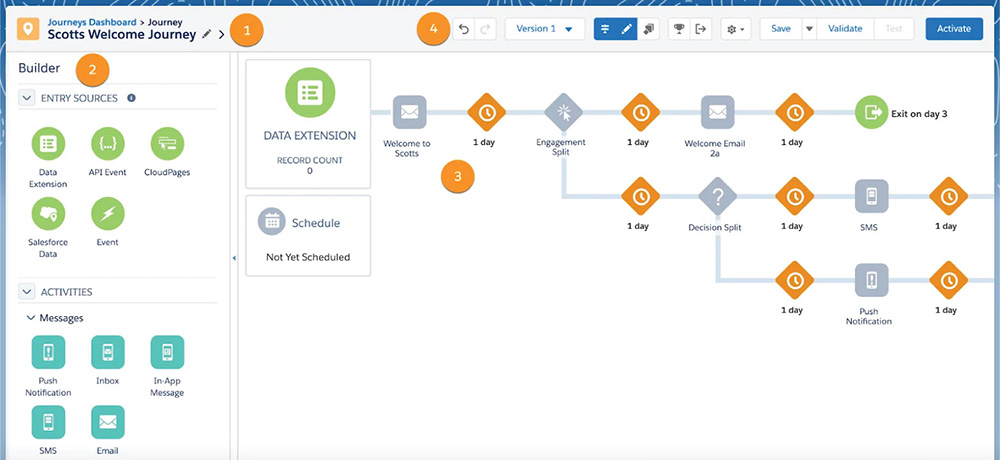
- Journey Builder : The visual platform allowed Jane to create sophisticated customer journeys effortlessly. She could map out each automated email based on specific subscriber actions, ensuring that connections felt personal and timely.
- Real-time Monitoring : Salesforce provided her with dashboards to track the performance of her automated campaigns. With real-time analytics, Jane could see which emails performed well and make adjustments on the fly.
- A/B Testing within Automations : Jane utilized A/B testing not just in standard campaigns but also within automated emails. By testing variations within her workflows, she could optimize messages, subject lines, and CTAs specifically tailored for automated sends.
Through the combination of her strategic automation setup and the powerful tools provided by Salesforce Marketing Cloud, Jane created a smooth, efficient email marketing engine. This not only saved her precious time but also ensured her audience received relevant and timely communications, deepening their engagement with her brand.