Introduction to Targeted Email Marketing
Defining Targeted Email Marketing
Targeted email marketing is a strategic approach to sending personalized messages to specific segments of your audience. Unlike traditional email marketing, which often opts for a one-size-fits-all model, targeted email marketing tailors content based on customers’ preferences, behaviors, and demographics. Imagine receiving an email that speaks directly to your interests—perhaps a discount on outdoor gear if you frequently shop for climbing equipment. That’s the essence of targeted email marketing: crafting experiences that resonate with the recipient.
To make it even clearer, targeted email marketing emphasizes:
- Segmentation : Dividing your email list into distinct groups based on criteria such as purchase history, geographical location, or engagement levels.
- Personalization : Customizing email content, subject lines, and offers to align with the unique interests of each segment.
This approach ensures that your emails are not just another piece of digital clutter but valuable communication that enhances customer relationships.
Importance of Targeted Email Marketing
The significance of targeted email marketing becomes evident when you consider its benefits. In a world inundated with generic advertisements and mass emails, personalization stands out. It not only drives higher engagement rates but also fosters loyalty among your customers.
Key points to consider:
- Higher Open Rates : Personalized emails enjoy significantly better open rates—reports suggest as high as 29% compared to 22% for regular emails.
- Improved Conversion Rates : Tailored messages result in improved conversions. A study found that targeted emails led to a 760% increase in revenue.
- Cost-Effectiveness : Investing in targeted email campaigns can be more cost-effective than broader advertising efforts, giving you greater returns on your marketing spend.
In conclusion, targeted email marketing is not just a trend; it’s a vital component for businesses that truly want to connect with their customers. By harnessing this personalized approach, brands can cultivate deeper relationships and foster enduring loyalty in their audience. This sets the stage perfectly for understanding how to effectively reach and engage these specific audiences in the following sections.
Understanding Your Target Audience
Segmenting Your Email List
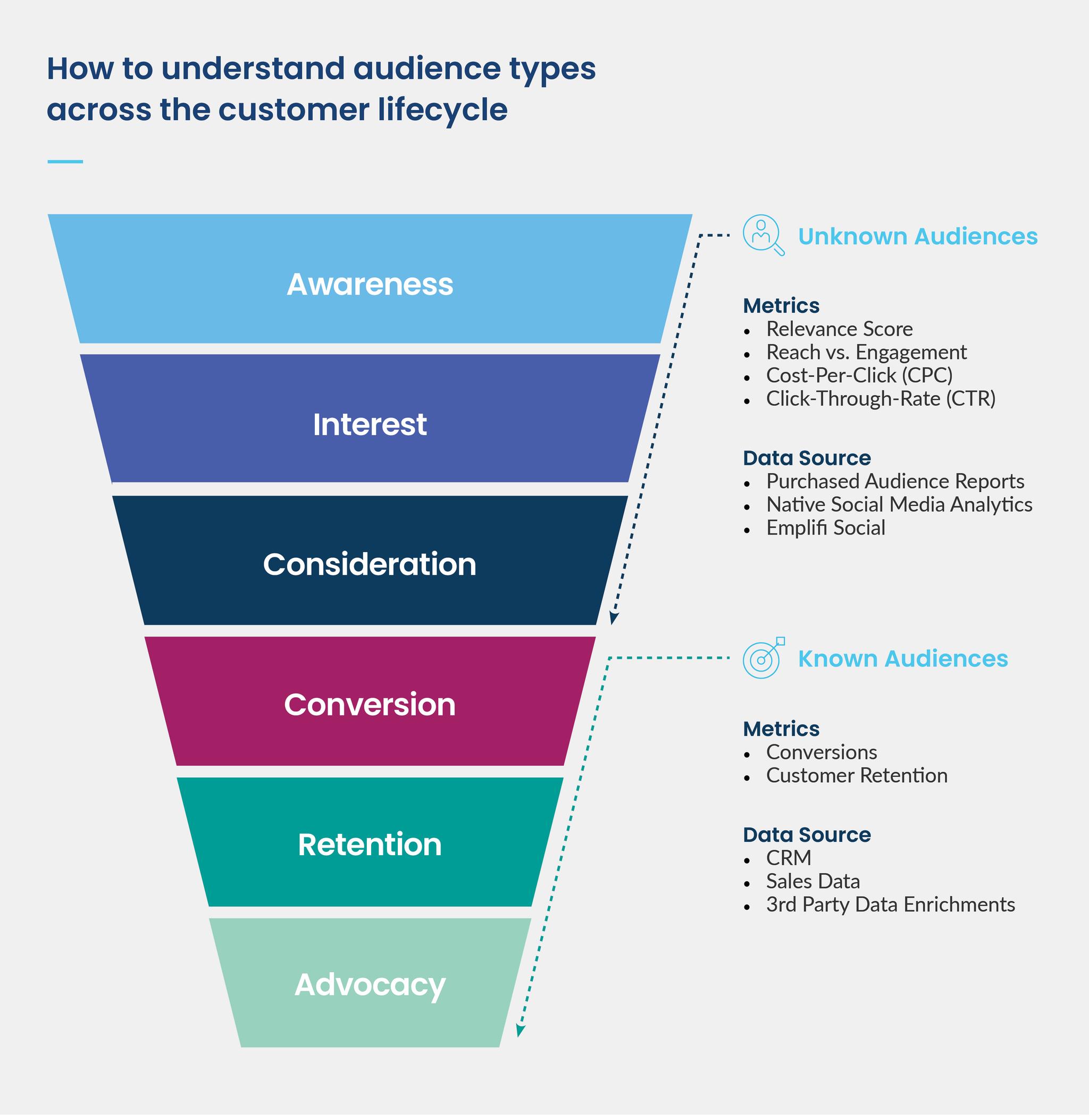
To harness the full potential of targeted email marketing, understanding your audience is key—and this begins with effective segmentation of your email list. Think of segmentation as dividing a large pizza into slices, where each slice represents a unique group of customers with special preferences or behaviors.
When segmenting your email list, you can consider various criteria, including:
- Demographics : Age, gender, and occupation can significantly influence purchasing behavior.
- Behavioral Data : Assess how customers interact with your emails (e.g., open rates, click-through rates). This helps you identify the type of content they prefer.
- Purchase History : Segment customers based on what they have purchased. For instance, new users might receive welcome offers, while loyal customers receive exclusive deals.
This targeted approach allows you to craft messages that resonate more deeply with each segment, encouraging engagement and fostering loyalty. For instance, a clothing brand might segment their list to send winter wear promotions to customers who previously purchased jackets.
Personalizing Email Content
Once your email list is segmented, it’s time to personalize the content. Personalization goes beyond just inserting a recipient’s name; it involves crafting messages that feel tailor-made for each individual or segment.
Here are some effective strategies for personalizing your email content:
- Dynamic Content Blocks : Use dynamic content that changes based on the recipient’s profile. For instance, highlight products related to their past purchases.
- Location-Based Offers : If your brand has multiple locations, send location-specific offers tailored to recipients’ geographic areas.
- Behavioral Triggers : Send emails triggered by specific actions, such as cart abandonment reminders or re-engagement emails for inactive subscribers.
A personal experience can illustrate this point perfectly. When a local bookstore sent me an email recommending books based on my past purchases, I felt understood and valued. This not only piqued my interest but also led to a purchase.
By segmenting your email lists and personalizing content accordingly, businesses can create meaningful connections with their audience, significantly enhancing engagement and loyalty. With these foundational strategies in place, the next step is crafting compelling email campaigns that capture attention and drive results.
Crafting Compelling Email Campaigns
Designing Eye-Catching Templates
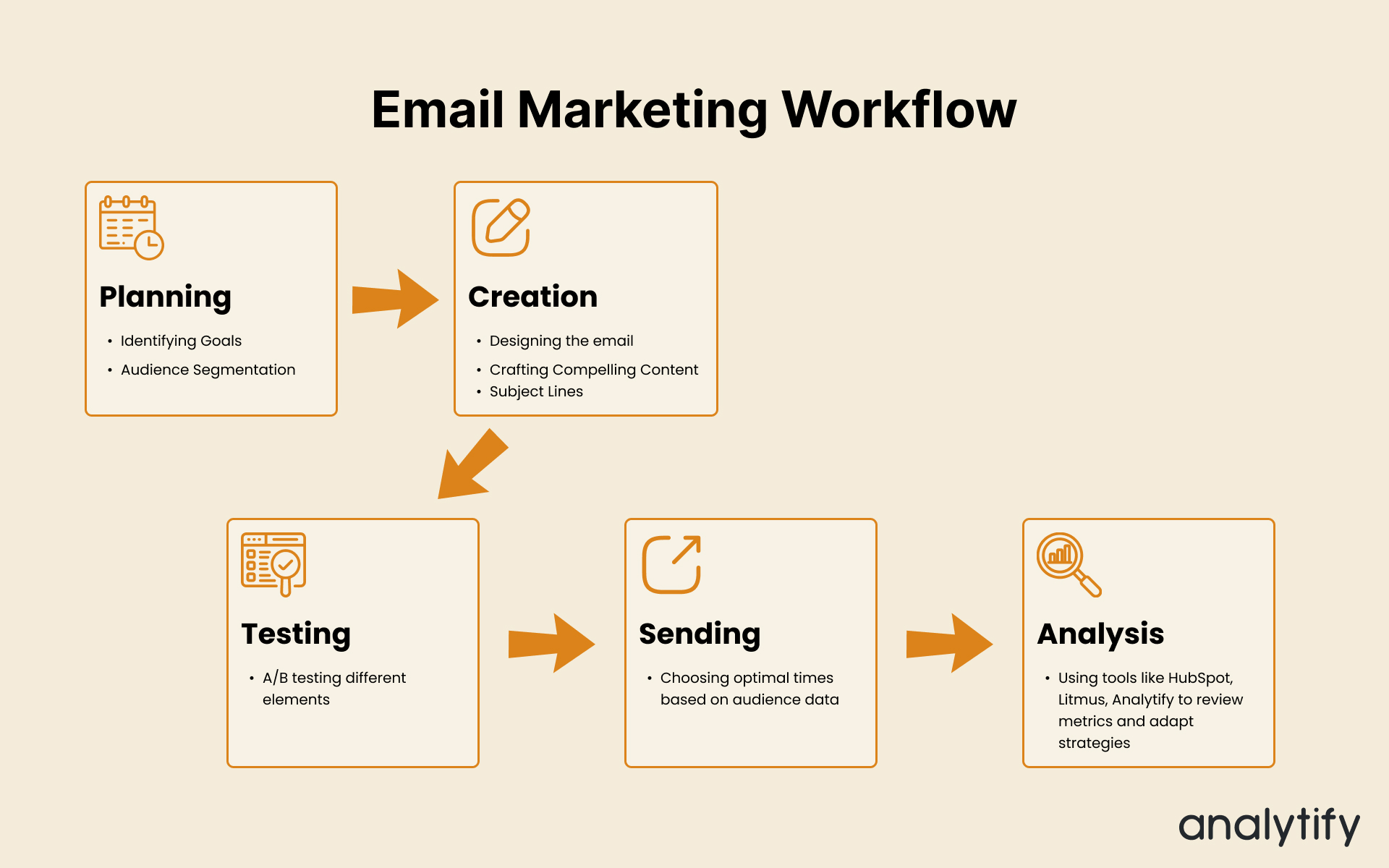
After understanding your target audience and personalizing your email content, the next vital step is crafting your email campaign, starting with designing eye-catching templates. A well-designed email template can significantly affect how your message is received and acted upon.
Here are some key tips for creating visually appealing templates:
- Use a Clean Layout : Aim for a straightforward, organized layout. Prioritize readability by avoiding clutter and keeping plenty of white space. As a rule of thumb, consider a one-column format for mobile optimization.
- Incorporate Brand Colors and Fonts : Ensure your email template reflects your brand’s identity by using consistent colors, fonts, and logo placement. This familiarity strengthens brand recognition and trust.
- Use High-Quality Images : Images can enhance your message and capture attention. Opt for relevant, high-resolution images that complement your content. For example, if you’re promoting a new product, showcase it in action.
A personal experience can highlight this point. When subscribing to a travel newsletter, the visually stunning templates filled with breathtaking images and clean design made me instantly eager to explore their offers. This illustrates the importance of crafting an inviting aesthetic.
Writing Engaging Copy
With a good template in place, it’s time to focus on the heart of your campaign: writing engaging copy. Compelling copy can captivate your audience and motivate them to take the desired action.
Here are some effective strategies for crafting engaging email copy:
- Start with a Strong Subject Line : Your subject line is the first impression. Keep it concise, intriguing, and relevant to encourage opens. For example, “Unlock Exclusive Deals Just for You!” creates a sense of curiosity.
- Hook Your Readers Early : Open with a compelling introduction that connects directly with your audience’s needs or interests. Use relatable anecdotes or questions to grab attention.
- Be Clear and Concise : Use short sentences and paragraphs to make your message digestible. Remember, readers often skim emails, so highlight important information with bullet points or subheadings.
- End with a Strong Call-to-Action (CTA) : Your CTA should be clear and direct, guiding readers on what steps they should take next. Phrasing like “Shop Now” or “Get Your Discount” can prompt immediate action.
Combining visually appealing templates with engaging copy sets a solid foundation for your email campaigns. Together, they create an inviting experience that encourages your audience to connect, engage, and ultimately convert. Now, let’s dive into implementing automation and personalization to further elevate these efforts.
Implementing Automation and Personalization
Leveraging Marketing Automation Tools
As we move forward from crafting compelling email campaigns, the next pivotal step is to implement automation and enhance personalization. One of the best ways to achieve this is by leveraging marketing automation tools. These tools are designed to streamline your marketing processes, allowing you to send the right message to the right person at the right time.
Here’s how you can effectively utilize automation tools:
- Automated Workflows : Set up automated workflows to deliver messages based on user actions. For example, if a customer abandons their shopping cart, an automated reminder can be sent to encourage them to complete their purchase.
- Scheduled Campaigns : Plan and schedule your email campaigns in advance, ensuring they are sent at optimal times for your audience. This way, you maintain consistent communication without having to remember daily tasks.
- Data Tracking and Analysis : Automation tools can gather data from past email campaigns, giving you insights into what works. Analyzing these metrics can inform future strategies and help refine your messaging further.
For instance, using a platform like Mailchimp or HubSpot allowed me to set up a welcome series for new subscribers, ensuring they received timely information and promotions without manual effort. This added professionalism to my outreach.
Personalizing Emails for Higher Engagement
Once you’ve set up automation, the next layer is personalization. Personalizing emails can significantly boost engagement rates and enhance the overall customer experience.
Consider these strategies for effective personalization:
- Dynamic Content : Use dynamic content that adapts based on the recipient’s profile, such as location or past purchases. For example, if a subscriber frequently buys fitness gear, show them new releases or tailored content related to fitness.
- Behavioral Insights : Analyze past behavior to send relevant recommendations. If a customer clicks on a gardening article, follow up with product suggestions related to gardening tools or supplies.
- Personalized Subject Lines : Make your emails stand out by incorporating the recipient’s name or specific interests in the subject line. For instance, “Sarah, Discover New Hiking Trails Near You!” feels far more engaging than a generic subject.
A personal anecdote can bring this home. Last year, I received an email from a favorite online retailer, customized with items I had browsed, along with a friendly reminder of a sale. It felt personal and relevant, drawing me back to shop again.
By implementing automation tools and improving personalization, businesses can create targeted campaigns that resonate with their audience, driving higher engagement and conversion rates. Next, we will explore how to measure success with analytics to ensure your efforts are effective.
Measuring Success with Analytics
Tracking Key Metrics
Having implemented marketing automation and personalization, it’s crucial to assess the effectiveness of your email campaigns through analytics. Measuring success provides insights that can sharpen your strategy and improve your results.
The first step is to track key metrics that help gauge performance. Here are some essential metrics to keep an eye on:
- Open Rate : This metric indicates how many recipients opened your email. A high open rate signifies that your subject lines are resonating with your audience.
- Click-Through Rate (CTR) : This measures the percentage of clicks on links within your email. A strong CTR suggests that your content is engaging and compelling.
- Conversion Rate : Ultimately, you’ll want to know how many recipients took your desired action, such as making a purchase. A higher conversion rate indicates effective messaging.
- Unsubscribe Rate : Keep tabs on how many people opt out of your emails. A sudden increase may reveal content or frequency issues.
By regularly monitoring these metrics, you can gather valuable data that informs your marketing efforts.
Analyzing Email Performance
After tracking key metrics, it’s time to analyze the data and draw actionable conclusions. This involves digging deeper into each metric and understanding the story behind the numbers.
Consider the following approaches for a thorough analysis:
- Segment Performance : Analyze how different segments of your audience respond. For example, determine if your personalized emails to loyal customers outperform generic ones sent to the entire list.
- A/B Testing Results : If you’ve conducted A/B tests, compare performance between variations, such as subject lines or content formats. Understanding reader preferences can guide future campaigns.
- Engagement Trends : Over time, observe trends in engagement. Discussing seasonal patterns or recurring themes can help you prepare for future campaigns, tailoring content to what resonates most.
A personal example comes to mind—a few months ago, I analyzed emails sent during a holiday promotion. By pinpointing which subject lines led to higher open rates, I was able to refine future campaigns, tailoring message strategies for maximum engagement.
By rigorously tracking key metrics and analyzing email performance, businesses can not only measure success but also implement data-driven strategies to enhance their email marketing efforts. Now armed with insights, it’s time to maximize those efforts by optimizing conversion rates. Let’s delve into practical strategies for achieving that goal.

Optimizing Conversion Rates
A/B Testing Email Campaigns
As you dive into optimizing conversion rates, one of the most effective strategies is A/B testing your email campaigns. This method allows marketers to experiment with different variables to see what resonates best with their audience. With A/B testing, you can fine-tune your campaigns and maximize your return on investment.
Here’s how to effectively implement A/B testing:
- Identify Test Variables : Start by selecting elements to test. This could include subject lines, email layouts, images, or even sending times. For instance, you might test two different subject lines to see which garners more opens.
- Split Your Audience : Divide your email list into two segments and send one version of the email to each group. For example, if you’re testing two subject lines, one half receives email A, while the other half gets email B.
- Analyze Results : After your campaign runs, analyze the performance of each version. Look for metrics like open rates, click-through rates, and conversion rates. This data will guide you in making informed decisions for future campaigns.
I remember when testing two different layouts for a special offer. The results showed that one layout resulted in a 20% higher conversion rate! This experiment not only boosted sales but also provided insights that shaped subsequent design choices.
Improving Call-to-Action Strategies
Another critical component of optimizing conversion rates lies in improving your call-to-action (CTA) strategies. Your CTA is the driver of engagement—it’s what you ultimately want your readers to do after reading your email.
Here are some tips to create compelling CTAs:
- Be Clear and Direct : Use action-oriented language that tells readers exactly what to do. Phrases like “Shop Now,” “Download Your Guide,” or “Claim Your Discount” are straightforward and effective.
- Create Urgency : Incorporate urgency in your CTAs by using time-sensitive language, like “Limited Time Offer” or “Only 2 Days Left!” This encourages readers to act quickly rather than putting it off.
- Optimize Visibility : Make your CTA stand out with contrasting colors and clear placement. A well-positioned CTA, above the fold and in a bold color, is more likely to draw attention.
In one instance, I changed a CTA from “Learn More” to “Discover Your Perfect Outfit” in a fashion brand’s email. This minor shift in wording resulted in a 30% increase in clicks, proving how impactful a well-crafted CTA can be.
By harnessing the power of A/B testing and refining your call-to-action strategies, you can effectively optimize conversion rates, turning readers into customers. This approach is crucial for sustaining growth and endorsing a cycle of continuous improvement in your email marketing campaigns. With this knowledge in hand, businesses can now effectively cultivate long-term relationships with their audience through strategic communication.