

Introduction
Importance of Keyword Research
When diving into the world of online content, one cannot overlook the significance of keyword research. It’s not just a task reserved for SEO professionals; it’s a fundamental step for anyone looking to enhance their online presence. Think of keyword research as the compass that guides your content strategy.
By identifying what potential visitors are searching for, you can tailor your content to meet their needs. This means you’re not just shouting into the void; you’re engaging directly with your audience. In my own experience, I noticed a remarkable uptick in engagement when I focused on the right keywords—such as using local terms for my small business rather than generic ones. Here are a few key reasons why keyword research is essential:
- Identifies Audience Intent: Understanding what users are looking for allows you to create content that resonates.
- Enhances Engagement: Relevant content keeps visitors on your page longer and encourages them to return.
- Guides Content Creation: A well-researched keyword list provides direction for future topics and posts.
How Keywords Impact SEO
Now, let’s talk about the role keywords play in SEO. Keywords are the bridge between what people are searching for and the content you create. When optimized correctly, they give your website a fighting chance to rank higher on search engine results pages (SERPs).
Consider these influential elements of keywords in SEO:
- Search Engine Ranking: The right keywords improve your chances of appearing in top search results.
- Traffic Generation: Higher visibility leads to increased organic traffic to your website.
- User Experience: Content enriched with relevant keywords enhances the overall user experience.
Ultimately, investing time in keyword research not only sets a solid foundation for your SEO strategy but also opens the door to connecting genuinely with your audience. Take it from someone who has seen firsthand the power of effective keyword usage—making this effort can truly transform your online success.

Understanding Keywords
Definition of Keywords
Now that we’ve established the importance of keyword research and its impact on SEO, let’s delve deeper into what keywords actually are. Simply put, keywords are specific words or phrases that people enter into search engines when looking for information. They act as the connective tissue between users and content, effectively guiding the search engine to what the user is seeking.
For instance, when I started a blog about cooking, I discovered that using keywords like “easy dinner recipes” helped me attract the right audience—those looking for convenient meal ideas, just like I once was. So, understanding the nuances of keywords is crucial to creating engaging and discoverable content.
Types of Keywords
Not all keywords are created equal; they come in various forms, each serving a different purpose in the vast landscape of search. Here’s a breakdown of the main types:
- Short-Tail Keywords: These consist of one or two words (e.g., “pizza” or “travel”). They attract high search volumes but come with significant competition.
- Long-Tail Keywords: These are more specific phrases (e.g., “best pizza in New York City”). They might attract fewer searches, but they often result in higher conversion rates due to their targeted nature.
- Local Keywords: These focus on locations (e.g., “coffee shops in Seattle”). They are vital for businesses looking to draw in community members.
- LSI Keywords: Latent Semantic Indexing keywords are terms related to your main keywords. For example, if your main keyword is “dog training,” LSI keywords might include “obedience classes” or “puppy training tips.”
Understanding these types of keywords helps in crafting a balanced content strategy, ensuring you reach a wider yet targeted audience. So, next time you sit down to brainstorm content, consider how each keyword type can play a role in your SEO success.

Keyword Research Tools
Google Keyword Planner
Having grasped the different types of keywords, it’s time to explore some powerful tools that can assist you in your keyword research journey. One of the most widely used tools is Google Keyword Planner. This free resource, provided by Google, is essential for anyone serious about improving their online visibility.
To get started, all you need is a Google Ads account, and you can dive into a wealth of valuable data. Here’s what I love about Google Keyword Planner:
- Search Volume Insights: It shows the average monthly searches for keywords, helping you understand demand.
- Keyword Suggestions: Just enter a keyword or phrase, and the tool generates related options, giving you ample ideas to enrich your content.
- Competition Metrics: This feature lets you gauge how competitive a keyword is, assisting you in selecting the right targets for your content strategy.
In my journey of starting a local bakery, using Google Keyword Planner to discover terms like “artisan bread near me” boosted my visibility among local customers.
SEMrush
Another exceptional tool worth mentioning is SEMrush, which takes keyword research to the next level. While it’s a paid tool, the insights you gain can be invaluable.
Here’s what makes SEMrush stand out:
- Comprehensive Keyword Data: It provides extensive keyword analysis, including difficulty scores, search volume, and competitive density.
- Competitor Analysis: You can see what keywords your competitors are ranking for, allowing you to identify gaps in your own strategy.
- Content Optimization Suggestions: SEMrush helps you optimize your content by suggesting additional keywords and topics that can improve your rankings.
I started using SEMrush when I wanted to expand my blog’s reach beyond my initial niche. The competitor analysis feature opened my eyes to untapped audiences, wisely guiding my content strategy moving forward.
Ultimately, whether you choose Google Keyword Planner, SEMrush, or both, utilizing these tools will empower you with the knowledge needed to make informed decisions about your keywords, driving traffic and enhancing your content’s effectiveness.

Conducting Keyword Research
Identifying Seed Keywords
Now that you’ve familiarized yourself with powerful keyword research tools, it’s time to put them to good use. The first step in conducting effective keyword research is identifying seed keywords. These are the foundational terms that embody the core topics you want to cover. They usually consist of one or two words and can often be broad topics, serving as the springboard for your research.
For example, if you run a health blog, your seed keyword might be “nutrition.” From this seed, you can branch out to find more specific keywords like “healthy meal plans” or “nutritional supplements.”
Here are a few tips for identifying seed keywords:
- Think Like Your Target Audience: What terms would they use to search for your content? Consider their language and interests.
- Use Your Existing Content: Review what you’ve already published. Often, top-performing posts can hint at potential seed keywords.
- Consider Related Topics: Jot down related topics that might resonate with your audience. This brainstorming session can yield fruitful seed terms.
Analyzing Keyword Competition
Once you’ve gathered your seed keywords, the next step involves analyzing keyword competition. Understanding how competitive a keyword is can save you time and resources and help you target more achievable options.
Here’s how to analyze keyword competition effectively:
- Use Tools: Platforms like SEMrush or Ahrefs can provide competitive difficulty scores, letting you know which keywords might be harder to rank for.
- Search Results Review: Conduct a quick Google search for your seed keywords. Take note of the websites that appear in the top results. Are they well-established brands, or are there openings for smaller sites?
- Content Quality Assessment: Look at the types of content that rank high for a keyword. If you notice comprehensive articles, infographics, or videos, it suggests you may need to up your game with equally valuable content.
During my early blogging days, I overlooked keyword competition—only to discover I was competing against major sites for terms that were far above my reach. Shifting my focus to less competitive, long-tail keywords provided the visibility I desperately needed.
Conducting thorough research on seed keywords and their competition effectively sets the stage for a successful content strategy that engages your audience and elevates your visibility.
Long-Tail Keywords
Definition and Benefits
Having a solid grasp of your seed keywords and conducting competition analysis naturally leads us to the topic of long-tail keywords. But what exactly are they? Long-tail keywords are longer phrases, usually consisting of three or more words, that are highly specific to a niche. For instance, instead of just targeting “shoes,” a long-tail keyword might be “best running shoes for flat feet.”
The beauty of long-tail keywords lies in their specificity. Here are some benefits to keep in mind:
- Higher Conversion Rates: Because they cater to more defined searches, users who enter long-tail keywords are typically further along in the buying process and more likely to convert.
- Lower Competition: These keywords often have less competition, which makes it easier to rank higher in search results. This can be a game changer for smaller businesses or content creators.
- Relevance: Long-tail keywords usually align better with the actual intent of the user’s search. This means you can create content that’s more engaging and useful to your audience.
When I started tailoring my content to include long-tail keywords, I noticed a marked increase in organic traffic to my website. It turned out that users were hunting for exactly what I offered, but I needed to speak their language.
Strategies for Finding Long-Tail Keywords
Now, let’s discuss how to uncover those goldmine long-tail keywords. Here are several tried-and-true strategies:
- Google Autocomplete: Start typing your seed keyword into Google’s search bar, and see what suggestions pop up. These suggestions are based on what other users commonly search for.
- Keyword Research Tools: Tools like AnswerThePublic or Ubersuggest can help generate long-tail keyword ideas. Simply enter your seed keyword, and watch the ideas roll in.
- Analyze Competitors: Check out what long-tail keywords competitors in your niche are using. Tools like SEMrush provide insights into the keywords your competitors rank for, which can inspire your own strategy.
- Customer Questions: Delve into forums, social media, or customer service inquiries to find out what questions people ask. This often reveals long-tail keywords that address specific needs.
By integrating these strategies into your keyword research process, you’ll discover long-tail keywords that resonate with your target audience, improve your SEO rankings, and enhance the overall effectiveness of your content.

LSI Keywords
Understanding Latent Semantic Indexing
As we continue our journey in keyword research, let’s talk about LSI keywords, or Latent Semantic Indexing keywords. If you’re wondering what LSI even means—don’t worry, it’s not as complicated as it sounds. Latent Semantic Indexing is a technique used by search engines to analyze and understand the context behind a piece of content.
In simpler terms, LSI keywords are words and phrases that are semantically related to the main keyword you’re targeting. For instance, if your primary keyword is “fitness,” LSI keywords might include “exercise routines,” “healthy eating,” or “weight loss.” These related terms help search engines connect the dots and determine the relevance of your content.
Integrating LSI keywords can enhance your content in several key ways:
- Improved Rank Potential: By providing more context around your main keywords, you help search engines understand your content’s focus, increasing the likelihood of ranking for multiple related terms.
- Broader Reach: LSI keywords can help you tap into different search queries, attracting a more diverse audience interested in various aspects of your topic.
- Enhanced User Experience: Including related keywords can create a more comprehensive and informative reading experience, which can keep visitors on your site longer.
Incorporating LSI Keywords in Content
So, how can you effectively incorporate LSI keywords into your content? Here are some creative tactics:
- Relevant Sections: Sprinkle LSI keywords throughout your article in headings, subheadings, or lists. For example, if writing about “digital marketing,” use LSI keywords like “content strategy” or “social media campaigns” in distinct sections.
- Synonym Usage: Mix in synonyms naturally within your content. If your primary keyword is “furniture,” consider using related terms like “home décor” or “interior design” to build a richer context.
- Answer Questions: Use Q&A formats or FAQ sections in your posts, employing LSI keywords in both the questions and answers to cover a wider set of related topics.
- Use Tools: Consider using tools like LSIGraph or Google’s related searches at the bottom of the search results page to discover potential LSI keywords relevant to your niche.
My own experience has shown that weaving LSI keywords into a post led to higher engagement and longer reading times, ultimately boosting my site’s visibility. By thoughtfully incorporating LSI keywords, you can significantly enrich your content and improve its SEO performance.
Competitor Keyword Analysis
Importance of Analyzing Competitor Keywords
Now that we’ve covered the foundational aspects of keyword research and the intricacies of LSI keywords, it’s crucial to turn our attention to competitor keyword analysis. Understanding what keywords your competitors are using can provide invaluable insights that inform your own strategy. Why is this so important?
Here are several reasons:
- Benchmarking: Observing competitors allows you to establish benchmarks for success. By analyzing their keyword strategies, you can identify areas where you need to improve or innovate.
- Content Gap Identification: Often, you’ll discover keywords for topics you haven’t yet addressed. This opens the door to creating content that fills those gaps and attracts more visitors.
- Strategic Advantage: By uncovering which keywords drive traffic for your competitors, you can target those same keywords or find untapped long-tail variations where competition might be lower.
When I first launched my online store, I was surprised to find some keywords my competitors used that I hadn’t even considered. This analysis not only shaped my SEO strategy but also influenced my content marketing efforts.
Tools for Competitor Keyword Research
To effectively analyze competitor keywords, you’ll want to utilize some powerful tools designed for this purpose. Here are a few top picks:
- SEMrush: This comprehensive SEO tool allows you to input a competitor’s domain and discover the keywords they rank for, along with the estimated traffic those keywords bring.
- Ahrefs: Known for its robust keyword explorer, Ahrefs helps you see which keywords your competitors are targeting, including their ranking positions and search volumes.
- Moz: Moz’s keyword explorer can provide insights into keyword competitiveness, helping you gauge how easy it might be to rank for specific terms that competitors are already using.
- SpyFu: This tool not only reveals competitor keywords but also shows the keywords they’ve used in their paid search campaigns.
By leveraging these tools, you can gain a comprehensive view of your competition’s keyword strategies. Incorporating this knowledge into your own content plan can help you not just keep up with the competition, but also outshine them and reach your target audience effectively.
Keyword Research Checklist
Steps for Effective Keyword Research
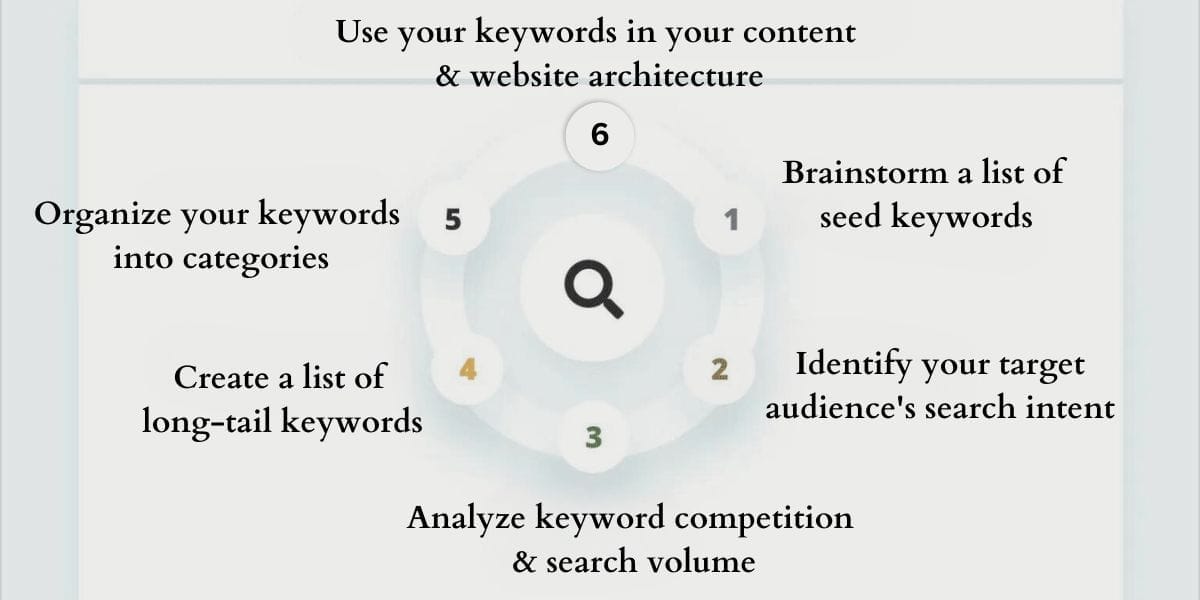
With a solid understanding of competitor analysis and the tools available to aid your research, let’s wrap up our keyword exploration with a practical checklist for effective keyword research. Following this checklist will ensure that you cover all essential aspects without missing crucial steps:
- Identify Your Niche and Audience: Begin with clarity on your niche. Who is your target audience, and what are their interests or pain points? This forms the foundation of your keyword strategy.
- Generate Seed Keywords: Brainstorm and list out seed keywords related to your niche. These can come from personal insights, audience questions, or existing content.
- Use Keyword Tools: Utilize tools like Google Keyword Planner, SEMrush, or Ahrefs to find related keywords, search volumes, and competition levels.
- Incorporate Long-Tail Keywords: Focus on identifying long-tail keywords which can help you capture specific searches and attract more qualified traffic.
- Analyze Competitors: Review competitor keyword usage to find opportunities and gaps in your own strategy.
- Create Content Clusters: Group similar keywords together to guide your content planning—consider a hub-and-spoke model where main topics lead to supporting articles.
- Monitor and Adjust: Continuously track the performance of your targeted keywords and adjust your strategy based on changing search trends or audience behavior.
Common Keyword Research Mistakes to Avoid
As you embark on your keyword research journey, it’s easy to make mistakes that can derail your efforts. Here are some common pitfalls to watch out for:
- Ignoring Search Intent: Focusing solely on search volume without considering the intent behind searches can lead to attracting the wrong audience. Ensure your content aligns with what users truly want.
- Neglecting Long-Tail Keywords: Dismissing long-tail keywords as secondary can mean missing out on highly motivated searchers looking for specialized information.
- Overlooking Competitor Analysis: Failing to analyze competitors might slow your growth. Competitors can provide inspiration for keywords you may have missed.
- Keyword Stuffing: Prioritizing keyword density over readability can negatively impact user experience and SEO. Always prioritize creating useful, engaging content.
In my own experience, failing to consider search intent on my first attempts at keyword research brought in traffic, but very few conversions. Learning from these common mistakes made a world of difference in refining my approach. By using this checklist and being mindful of these pitfalls, you’ll set a strong foundation for your keyword strategy that drives meaningful results.