

Introduction to Email Marketing
Email marketing has become a cornerstone strategy for businesses aiming to connect with their audience effectively. It’s not merely a tool for sending newsletters; it represents a potent channel for building relationships, driving engagement, and ultimately boosting sales.
Importance of Email Marketing
The value of email marketing cannot be overstated. With the right approach, it can deliver a remarkable return on investment (ROI). Here are some compelling reasons why email marketing holds significant importance:
- Direct Communication : Email allows businesses to reach customers directly in their inbox, ensuring higher visibility than social media feeds where posts can easily get lost.
- Cost-Effective : Compared to traditional marketing methods, email campaigns are relatively low-cost while yielding high returns.
- Measurable Results : With analytics tools, businesses can track open rates, click-through rates, and conversions, making it easier to measure campaign performance.
- Targeted Messaging : Segmenting your audience enables tailored content that resonates more deeply with different groups, enhancing engagement.
For example, a small online bookstore could use email marketing to send personalized book recommendations based on previous purchases, connecting more intimately with readers’ interests.
Evolution of Email Marketing
The landscape of email marketing has transformed considerably since its inception. Once a simple means of communication, it has evolved into a sophisticated marketing discipline. Here’s a brief overview of its evolution:
- The Early Days : Email marketing began in the late 1970s when the first marketing message was sent to 400 users on ARPANET, sparking interest in digital advertising.
- The 1990s Boom : As the internet became widely accessible, a flood of emails emerged. Companies began to use email for promotional purposes; however, it was often ineffective due to the lack of targeting.
- The Dawn of Automation (2000s) : The introduction of automation tools marked a turning point. Businesses began employing platforms that enabled automated emails based on user behavior.
- The Personalization Era (2010s) : Personalization became key with businesses using data to tailor messages, improving customer engagement.
- Current Trends (2020s and beyond) : Today, email marketing embraces advanced segmentation, artificial intelligence, and integration with other digital marketing channels, making it more dynamic.
Understanding these shifts provides a crucial context for businesses looking to harness the power of email marketing in today’s digital landscape. Embracing these changes can significantly enhance their campaign effectiveness and foster stronger connections with their audiences.
Building an Email List
Having a robust email list is essential for effective email marketing. Your email list is more than just a collection of contacts; it’s a valuable asset that enables you to directly communicate with potential customers and engage with them meaningfully.
Creating Lead Magnets
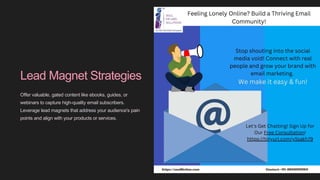
To grow your email list, one of the most effective strategies is to create compelling lead magnets. A lead magnet is something of value that you offer to your audience in exchange for their email addresses. Think of it as a trade: their contact information for something beneficial.
Here are a few examples of effective lead magnets:
- E-books : A well-researched e-book on a relevant topic can provide significant value, especially if it addresses common pain points in your audience.
- Checklists and Guides : Simple, actionable resources, like a “10-Step Guide to Better Email Marketing,” can attract subscribers eager for quick tips.
- Free Trials or Samples : Allowing potential customers to experience your product for free can entice them to join your email list and become future buyers.
- Exclusive Discounts : Offering a discount code for first-time subscribers is a classic yet effective way to entice sign-ups.
The goal is to ensure that the lead magnet aligns with your brand and resonates with your target audience’s needs.
Segmenting Your Audience
Once you’ve begun building your email list, the next vital step is audience segmentation. Segmentation involves dividing your email list into specific groups based on shared characteristics. This approach allows for more personalized and relevant communication.
Consider these segmentation strategies:
- Demographic Segmentation : Grouping users based on age, gender, location, or occupation can help tailor messages accordingly.
- Behavioral Segmentation : Analyzing how subscribers interact with your emails can reveal patterns that guide your approach, such as sending targeted campaigns to those who frequently engage with your content.
- Interest-Based Segmentation : Learn about your audience’s interests, and create specific lists based on their preferences.
For instance, a fitness brand might segment their list into categories like “beginners,” “enthusiasts,” and “professionals,” allowing them to send targeted workout plans that cater to each level.
Ultimately, effective segmentation enhances engagement and drives conversions by ensuring your communications resonate with the right people. As you continue to develop your email marketing strategy, building and segmenting your email list will prove vital in fostering lasting customer relationships.

Crafting Compelling Email Content
Now that you’ve built and segmented your email list, the next crucial step is crafting the actual content that will captivate your audience. The effectiveness of your email ultimately hinges on how well you engage your recipients right from the subject line.
Writing Attention-Grabbing Subject Lines
The subject line is your email’s first impression; it’s what makes your audience stop scrolling and click open. A compelling subject line can dramatically increase your email open rates. Here are some effective strategies to consider:
- Be Clear and Concise : Ideally, keep your subject lines around 6-10 words. Clarity is essential; busy subscribers should immediately understand the email’s value.
- Create a Sense of Urgency : Phrases like “Limited Time Offer” or “Don’t Miss Out!” can prompt quick actions from your audience.
- Use Numbers and Lists : For example, “5 Tips to Boost Your Productivity” instantly conveys actionable value.
- Ask Questions : Engaging your audience with a question, such as “Ready to Transform Your Lifestyle?” sparks curiosity.
For instance, when I sent out an email with the subject line “Unlock These 10 Exclusive Tips Just for You,” the open rate skyrocketed because it felt personal and enticing.
Personalizing Email Content
Once your audience has clicked open, personalized content keeps them engaged and can lead to higher conversion rates. Personalized emails are tailored to the individual recipient, making them feel valued and understood. Here’s how you can do it effectively:
- Use the Recipient’s Name : Addressing your subscriber by their first name in both the subject line and the email body creates a connection.
- Tailor Content Based on Interests : If you have segmented your audience, you can customize the content to speak directly to their specific interests. For example, sending workout tips to fitness enthusiasts while offering healthy recipes to those interested in nutrition.
- Include Relevant Recommendations : Based on previous purchases or interactions, suggest products or content they might find useful, enhancing their experience.
By leveraging these personalization tactics, businesses can create a sense of familiarity and relevance that resonates deeply with subscribers.
Combining attention-grabbing subject lines with personalized content will significantly enhance your email marketing efforts, increasing engagement and fostering lasting relationships with your audience. As you craft your emails, always keep the reader at the forefront of your strategy.
Designing Effective Email Campaigns
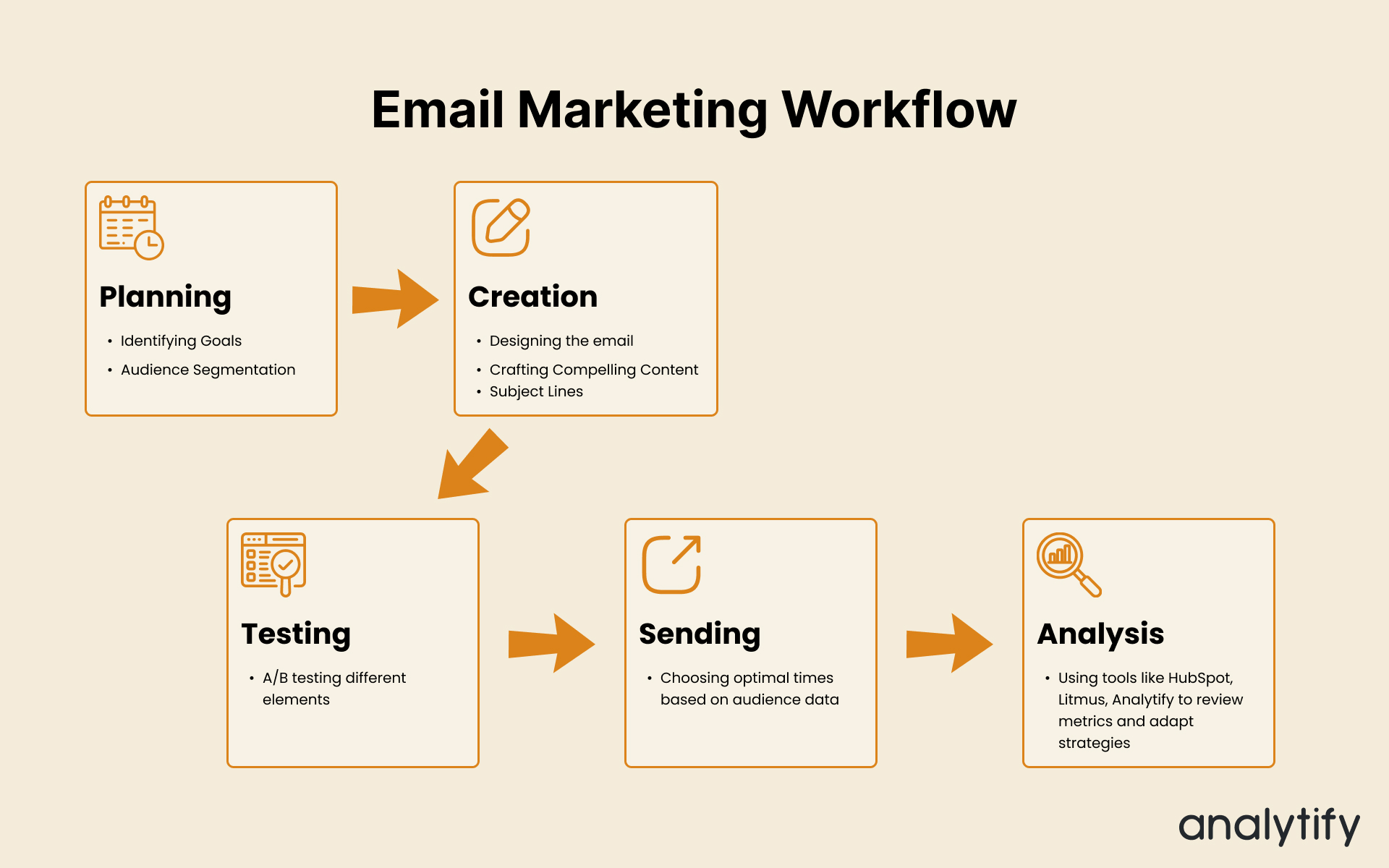
With compelling content in place, the next step is designing effective email campaigns that not only look good but also function seamlessly. The right design can enhance the user experience and lead to higher engagement rates.
Choosing the Right Email Template
Selecting an appropriate email template sets the tone for your message and should align with your brand’s identity. Using the right template can make all the difference in how your audience perceives your emails. Consider these factors:
- Brand Consistency : Your template should reflect your brand’s colors, fonts, and overall aesthetic. For example, a luxury skincare brand might use elegant fonts and a soft color palette to evoke sophistication.
- Clear Layout : Utilize a clean, organized structure that guides readers through your content. A good template includes:
- Hierarchy : Headings should stand out to emphasize key points.
- Whitespace : This prevents the email from feeling cluttered, making it easier to digest.
- Call-to-Action Placement : Ensure that your call-to-action (CTA) buttons are prominently placed within the template. They should be easy to find and click.
When I recently updated my email template, I noticed an immediate improvement in engagement. By simplifying the design and including bold CTAs, subscribers were more likely to click through to my blog!
Optimizing for Mobile Responsiveness
In today’s digital landscape, it’s crucial to remember that a significant portion of your audience will be reading emails on their mobile devices. Failing to optimize for mobile can lead to lost opportunities and frustrated readers. Here’s how to ensure mobile responsiveness:
- Test Before Sending : Always preview your emails on different devices to ensure they look good everywhere. Most email marketing platforms offer testing tools to check responsiveness.
- Keep it Simple : Mobile screens have limited real estate, so stick to a single-column layout. This makes it easier for readers to scroll and engage without excessive zooming.
- Larger Clickable Areas : Ensure buttons and links are easy to tap on mobile devices. A good rule of thumb is to make CTAs at least 44 pixels high.
By making these design adjustments, businesses can enhance user experience, ensuring emails look just as good on mobile devices as they do on desktops. Ultimately, investing time and effort into your email design pays off by increasing engagement, fostering loyalty, and driving conversions. An attractive, well-structured email will always have a better chance of resonating with your audience.
Increasing Email Engagement
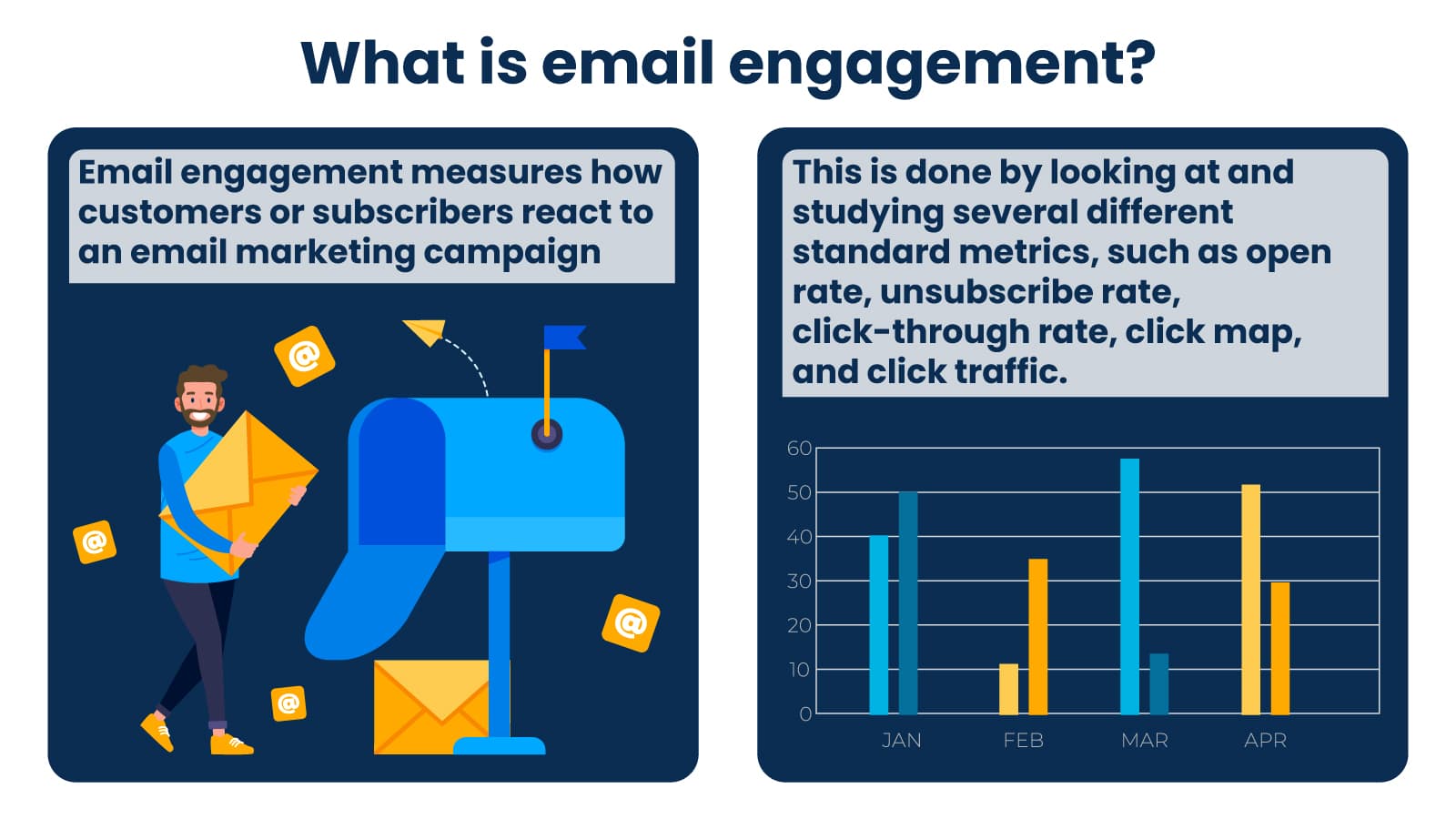
After establishing an effective design for your email campaigns, the next critical step is to focus on increasing email engagement. Engaging your audience is essential for boosting conversion rates and building lasting relationships. Two key strategies that can significantly enhance engagement are crafting compelling call-to-actions (CTAs) and implementing A/B testing for optimization.
Call-to-Action Strategies
A well-crafted call-to-action can be the make-or-break factor for your email. It’s the point where you invite your readers to take the next step, whether it’s visiting your website, signing up for a webinar, or making a purchase. Here are some effective strategies for designing impactful CTAs:
- Be Clear and Direct : Use action-oriented language. Phrases like “Shop Now,” “Download Today,” or “Get Started” clearly communicate what you want the reader to do.
- Make it Stand Out : Use contrasting colors and bold fonts to make your CTA button visually distinct from the rest of the content. A little bit of whitespace around the button can also draw attention.
- Create Urgency : Phrases like “Limited Time Offer” or “Only a Few Spots Left!” can encourage immediate action, prompting readers to respond sooner rather than later.
When I optimized my email CTAs using these strategies, I noticed a significant boost in click-through rates. Transitioning from a bland “Learn More” to a vibrant “Discover Exclusive Deals Today!” worked wonders.
A/B Testing for Optimization
Once you have your CTAs and email content set, don’t forget the power of A/B testing. This method allows you to compare two versions of an email to see which one performs better. By systematically testing different elements, you can enhance your engagement over time. Here’s how to approach A/B testing effectively:
- Identify What to Test : Common elements to test include subject lines, CTAs, email layouts, and images. Start small, focusing on one element at a time for clearer results.
- Set Clear Goals : Know what you’re trying to achieve with each test. Are you looking for higher open rates, more clicks, or better conversions?
- Analyze Results : After sending your test emails, take a close look at the performance metrics. Determine what worked, what didn’t, and incorporate those insights into future campaigns.
For instance, I once tested two subject lines for the same email campaign. One emphasized a discount, while the other highlighted new arrivals. The results showed a 20% higher open rate for the discount-focused line – a valuable nugget to apply in subsequent emails.
By implementing effective CTA strategies and utilizing A/B testing, businesses can significantly improve their email engagement, paving the way for increased conversions and long-term customer loyalty. Engaging content leads to deeper connections, making it essential for overall marketing success.

Understanding Email Analytics
To enhance your email marketing efforts, understanding email analytics is crucial. Even the best-crafted emails won’t achieve desired results without tracking their effectiveness. By diving into the data, businesses can gain valuable insights and optimize future campaigns for better results.
Key Metrics to Track
When analyzing the success of your email campaigns, several key metrics provide illuminating insights into how your emails are performing. Here are some of the most important ones to monitor:
- Open Rate : This metric tells you the percentage of recipients who opened your email. Aiming for a higher open rate indicates that your subjects are compelling enough to grab attention.
- Click-Through Rate (CTR) : Measuring the percentage of recipients who clicked on one or more links in your email, the CTR is essential for gauging engagement.
- Conversion Rate : After clicking through, how many recipients completed the desired action (e.g., making a purchase)? Tracking this metric helps assess the effectiveness of your content and CTAs.
- Bounce Rate : This indicates the percentage of emails that were not successfully delivered. High bounce rates may suggest an issue with your email list quality or targeting.
- Unsubscribe Rate : If you notice an uptick in unsubscribes, it could be an indicator that your content isn’t resonating well with your audience.
For example, after propelling my email marketing strategy, I noticed the CTR improve significantly when I focused on interesting, relevant content that matched audience interests.
Interpreting Data for Improvement
Tracking these metrics is only the beginning; interpreting the data is where the magic happens. Once you have the numbers in front of you, consider the following approaches for improvement:
- Identify Trends : Look for patterns over time. Do open rates increase with specific subject lines or at certain times of the day? Understanding these trends can inform future campaigns.
- Segment Analysis : Analyze metrics by different audience segments. It’s possible that what works for one demographic may not resonate with another, so fine-tuning your strategy can lead to better engagement.
- A/B Testing Insights : Reflect on previous A/B tests, compare the results, and apply insights. If one approach consistently outperforms another, integrate those methods into your overall strategy.
- Solicit Feedback : Sometimes, the best way to know what works is to ask your audience directly. Simple surveys integrated into your emails can provide qualitative data that complements your quantitative findings.
In closing, leveraging email analytics effectively transforms your marketing strategy. By tracking key metrics and interpreting the data with thoughtful analysis, businesses can enhance performance, refine content, and finally connect more deeply with their audience. Thus, understanding email analytics is not just a practice; it’s an ongoing journey of optimization and growth.