

Introduction
In today’s fast-paced world, restaurants are constantly searching for effective ways to connect with customers and keep their dining spots buzzing. Amid the various marketing tactics available, email marketing stands out as a powerful tool that offers a direct link to patrons. This allows for personalized communication that can enhance customer relationships and boost revenue significantly.
The Shift to Digital Communication
With the rise of digital communication platforms, many restaurants have started recognizing the importance of maintaining an ongoing dialogue with their clientele. In fact, studies show that email continues to yield a higher ROI compared to other marketing channels. Just think about it: when was the last time you received an engaging email from your favorite restaurant? Perhaps it was a reminder about a special event or a limited-time discount. That interaction helps keep the restaurant at the forefront of your mind—something invaluable these days.
The Power of a Well-Executed Email Strategy
For diners, receiving emails isn’t just about promotions. It’s an invitation to engage, whether it’s through reservations, feedback requests, or the latest menu updates. This is where the magic happens; effective email marketing can transform a one-time diner into a loyal patron. Moreover, it allows for cross-promotion of offerings—like recommending a wine that pairs perfectly with a featured dish.
To harness the power of email marketing, restaurants need a strategy that encompasses various elements such as personalization, targeted campaigns, and enticing promotions. With the right approach, they can not only enhance customer loyalty but also drive impressive revenue growth, ultimately leading to a thriving business. In the following sections, we’ll explore the importance of email marketing for restaurants and provide actionable insights on crafting compelling emails that resonate with their audience.
Importance of Email Marketing for Restaurants
As we delve deeper into the significance of email marketing, it becomes clear that it plays a pivotal role in enhancing both customer loyalty and revenue generation for restaurants. By understanding these components, dining establishments can create a robust framework that benefits both the business and its patrons.
Building Customer Loyalty
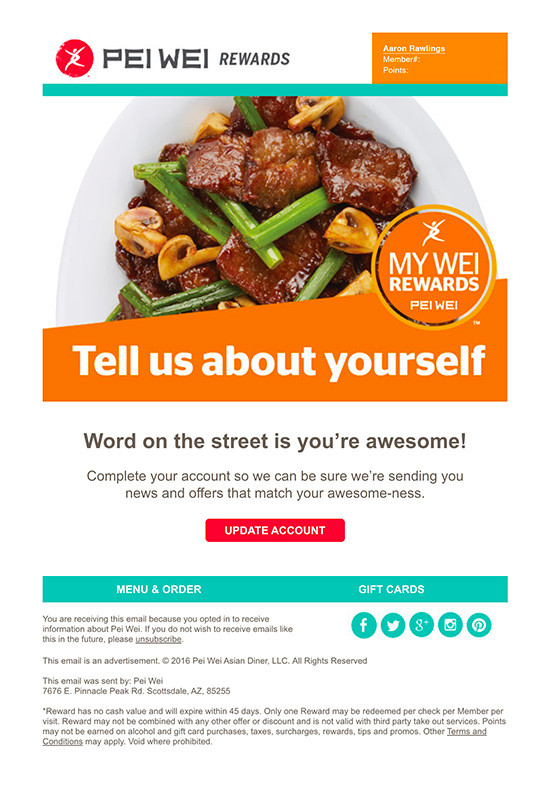
The essence of any thriving restaurant is its customers, and establishing loyalty is vital in keeping them coming back. Email marketing serves as a direct line of communication that fosters a sense of community among diners. When patrons receive personalized emails—be it a birthday discount or updates on new menu items—they feel valued and connected to the restaurant.
For instance, consider the local Italian eatery that sends out a monthly newsletter featuring stories about its family recipes. This not only engages customers but also helps them feel like they are part of the restaurant’s journey. Some practical ways to build loyalty through email include:
- Sending Thank You Emails: A simple thank you after a visit can go a long way in making customers feel appreciated.
- Exclusive Offers: Loyalty discounts available only to email subscribers can incentivize repeat visits.
- Feedback Requests: Asking for opinions on recent visits makes customers feel involved in the establishment’s journey.
Increasing Revenue
It’s no surprise that effective email marketing can lead to increased revenue. A well-crafted email campaign can drive both new and repeat customers through the door. Studies suggest that personalized emails can have open rates as high as 29%, which can significantly affect performance.
To capitalize on revenue opportunities, restaurants can focus on:
- Promoting Limited-Time Offers: Highlighting exclusive deals can create urgency among diners.
- Showcasing New Menu Items: Emails can be a perfect platform to showcase what’s upcoming in the kitchen.
- Event Invitations: Special events like wine tastings or themed nights can boost patronage, especially when promoted through email.
With these strategies in mind, it’s evident that email marketing is not just a tool but a vital component in the restaurant industry’s recipe for success. The combination of building customer loyalty and driving revenue forms the foundation for a flourishing dining experience.

Crafting Compelling Emails
Having established the significance of email marketing in fostering customer loyalty and boosting revenue, the next step is mastering the art of crafting compelling emails. The effectiveness of an email campaign often hinges on two key elements: personalization and a strong call-to-action (CTA). Let’s break these down further.
Personalization
Personalization is no longer a luxury; it’s a necessity when it comes to email marketing. By tailoring emails to individual preferences and behaviors, restaurants can create a more engaging experience for their customers. For example, a diner who frequently orders pasta could receive emails showcasing new pasta dishes or special events related to Italian cuisine. This detailed approach can cultivate a sense of connection and relevance.
Some effective personalization techniques include:
- Using Names: Addressing subscribers by their first name can make the email feel more inviting.
- Segmenting Your Audience: Divide your email list based on preferences, dining frequency, or location to send targeted offers.
- Behavior Tracking: Use past orders to personalize recommendations, suggesting favorites that match their tastes.
By implementing personalization, restaurants not only show their diners that they care but also increase the likelihood of engagement.
Call-to-Action
Once you’ve captured your audience’s attention with personalization, the next critical component is a compelling call-to-action. A strong CTA guides your customers on what to do next, whether it’s making a reservation, placing an order, or redeeming a special offer.
Here are some tips for crafting effective CTAs:
- Be Clear and Direct: Use action-oriented language, such as “Reserve Your Table Now” or “Get Your Discount Today.”
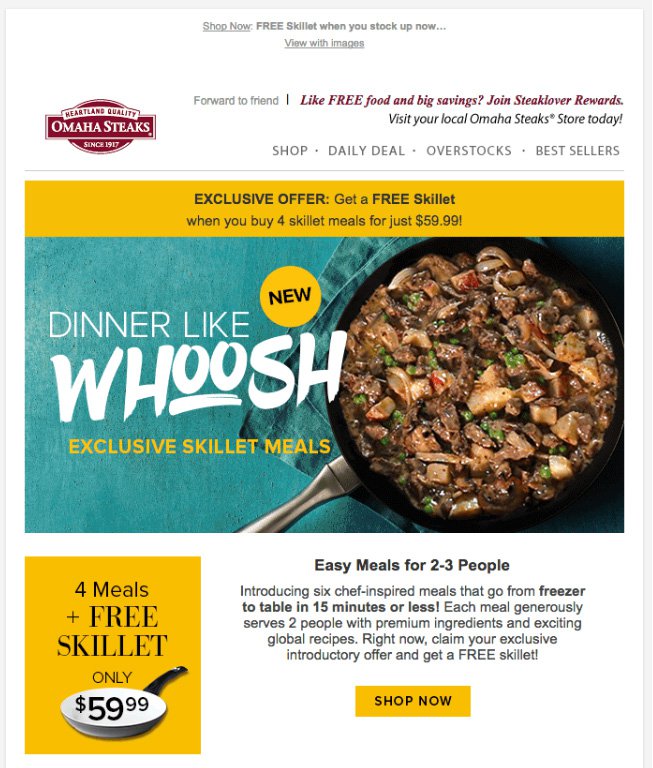
- Create Urgency: Phrases like “Limited Time Offer!” can prompt quick action from potential diners.
- Make It Stand Out: Position your CTA button clearly in the email and use contrasting colors to draw attention.
By blending strong personalization with actionable CTAs, restaurants can create emails that not only resonate with their audience but also encourage tangible responses, leading to increased interaction and business success. Receptive customers are more likely to engage, paving the way for a thriving relationship between the restaurant and its patrons.
Targeting the Right Audience
Once restaurants have crafted compelling emails, the next crucial step is ensuring they are reaching the right audience. Effectively targeting customers can maximize engagement and response rates. Two core strategies for achieving this are segmenting the email list and monitoring analytics. Let’s explore both.
Segmenting Your Email List
Segmenting your email list is akin to tailoring a suit rather than wearing a one-size-fits-all outfit. By dividing your subscriber list into smaller groups based on shared characteristics, restaurants can send more relevant and targeted messages.
Consider the following segmentation criteria:
- Dining Preferences: Group customers by their favorite cuisine types or dietary restrictions (e.g., vegetarian or gluten-free).
- Purchase History: Use past orders to create segments for frequent diners, casual visitors, and new customers.
- Geographical Location: Target local customers with special events or promotions that are relevant to their area.
For instance, a Mexican restaurant might send different emails to customers who often order tacos compared to those who prefer enchiladas, ensuring that each group receives tailored promotions. As a result, this enhances customer satisfaction and improves the likelihood of repeat visits.
Monitoring Analytics
Once segmentation is in place, monitoring analytics becomes essential to refining your email marketing strategy. Tracking how recipients interact with your emails can provide invaluable insights into their preferences and behaviors.
Some key analytics to focus on include:
- Open Rates: Gauge how well your subject lines engage recipients. Low open rates may signal the need for more compelling titles.
- Click-Through Rates (CTR): Analyze clicks on specific links to understand which promotions or topics resonate most with your audience.
- Conversion Rates: Measure how many clicks lead to actual reservations or purchases, helping you assess the effectiveness of your calls-to-action.
For example, if a restaurant notices a high open rate but a low CTR on “limited-time offer” links, it may benefit from testing different wording or visuals in future emails.
By combining effective segmentation with diligent monitoring of analytics, restaurants can develop a more focused and successful email marketing strategy. With the right audience engaged, the likelihood of securing repeat customers and turning casual diners into loyal patrons becomes increasingly achievable.
Implementing Exclusive Offers
With a well-targeted audience identified and a strong strategy in place, the next logical step for restaurants is to harness the power of exclusive offers. These offers not only incentivize customers but also enhance their connection to the brand. Two effective types of exclusive promotions are discounts and coupons, as well as special event invitations. Let’s delve into both.
Discounts and Coupons
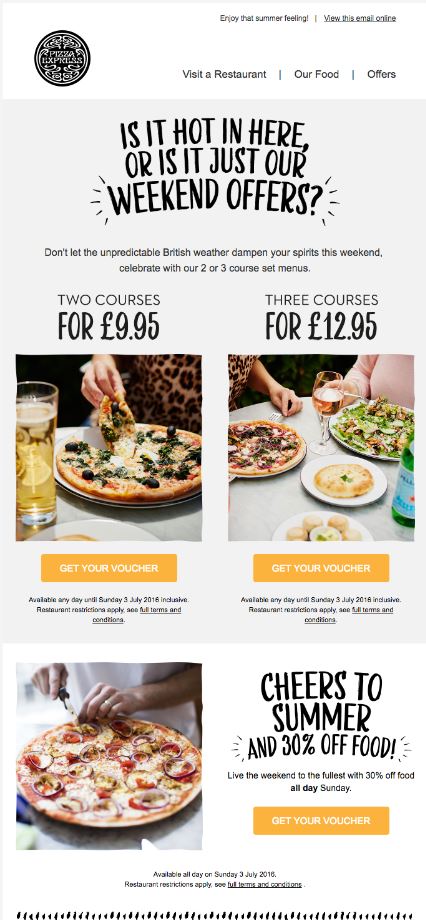
Offering discounts and coupons through email is a proven method for driving immediate traffic to restaurants. Whether it’s a percentage off on a customer’s next meal or a “buy one, get one free” offer, these incentives can create a sense of urgency and excitement among patrons.
Some effective ways to implement discounts and coupons include:
- Loyalty Rewards: Send a personalized coupon to frequent diners, acknowledging their loyalty with offers like “15% off your next visit.”
- Holiday Promotions: For occasions such as Valentine’s Day or Independence Day, send out time-sensitive offers to encourage reservations.
- Referral Discounts: Motivate existing customers to bring friends by offering both the referrer and the new customer exclusive deals.
For example, a family-run diner might send out an email saying, “Enjoy 20% off your next family meal—because we appreciate you!” This creates a warm atmosphere that fosters loyalty while driving traffic.
Special Event Invitations
In addition to discounts, special event invitations can be a fantastic way to engage customers and fill dining rooms. These invitations can turn ordinary nights into extraordinary experiences, making diners feel like they are part of something special.
Consider hosting events that cater to your audience’s interests, such as:
- Wine Tasting Evenings: Invite customers to a curated tasting experience, perhaps highlighting local wines or unique food pairings.
- Cooking Classes: Offer exclusive invitations for hands-on classes with the head chef, where diners can learn to cook signature dishes.
- Holiday Celebrations: Leverage holidays with themed dinners or live music nights, targeted at your loyal customers through their email newsletters.
For instance, a trendy gastropub might reach out to its list with, “Join us for our exclusive Brewmasters Dinner this Wednesday—reserve your seat now!” By creating a sense of exclusivity and urgency, restaurants can elevate engagement and sales.
By implementing these exclusive offers, restaurants not only encourage repeat visits but also strengthen their place in diners’ hearts. When customers feel valued and excited about promotions, they are more likely to spread the word, boosting word-of-mouth referrals even further.

Creating Enticing Promotions
Once restaurants have effectively implemented exclusive offers, the next step is to take things up a notch by creating enticing promotions. These promotions not only attract new customers but also keep the regulars excited about what’s next. Two effective strategies to achieve this are through limited-time offers and loyalty programs. Let’s explore how each can be used to drive business.
Limited-Time Offers
There’s something inherently exciting about a limited-time offer. The urgency they bring can spur customers into action, making them feel they need to take advantage of a special deal before it’s gone. This tactic plays on the psychological principle of scarcity, which can be a powerful motivator.
Some effective limited-time offer ideas include:
- Flash Sales: Announce unexpected flash sales via email, offering discounts for just a few hours. For example, “Happy Hour All Day! 50% off all appetizers from 3 PM to 6 PM today only!”
- Seasonal Specials: Promote dishes that are available for a limited period, like a pumpkin spice latte in the fall or a special summer barbecue menu.
- Countdown Timers in Emails: Use countdown timers in promotional emails to emphasize the urgency of a deal, compelling customers to act immediately.
An example could be a seafood restaurant announcing, “Enjoy our Lobster Fest—only this weekend! Book your table now!” This creates excitement and encourages immediate reservations.
Loyalty Programs
On the other hand, while limited-time offers create urgency, loyalty programs build a sense of commitment between diners and the restaurant. A well-structured loyalty program rewards repeat customers and incentivizes them to return more frequently, enhancing overall customer satisfaction.
Key components of a successful loyalty program may include:
- Point-Based Systems: Allow customers to earn points on every dollar spent, redeemable for discounts or free items. For instance, “Earn 1 point for every $1 spent—100 points gets you a free dessert!”
- Exclusive Membership Tiers: Create tiers that offer greater rewards at different levels, motivating patrons to come back more often.
- Birthday Treats: Send personalized emails offering a free dessert or meal to loyal customers on their birthday, further enhancing their connection to the restaurant.
Picture a cozy café that sends out a birthday greeting to customers saying, “Celebrate your special day with a complimentary dessert on us!” This not only makes customers feel appreciated but also encourages them to bring friends along to enjoy the treat.
In summary, combining limited-time offers with robust loyalty programs enables restaurants to engage customers uniquely and effectively. Together, these strategies create a dynamic that keeps the dining experience fresh, exciting, and inherently rewarding—leading to increased foot traffic and a loyal customer base.
Maximizing Engagement Through Email Campaigns
Having explored various strategies for creating enticing promotions, it’s now essential to discuss how to maximize engagement through well-executed email campaigns. Engaging customers through email is not just about sending messages; it is about crafting experiences that resonate, encourage action, and foster a lasting connection with the restaurant. Here are some effective approaches to achieving just that.
Interactive Content
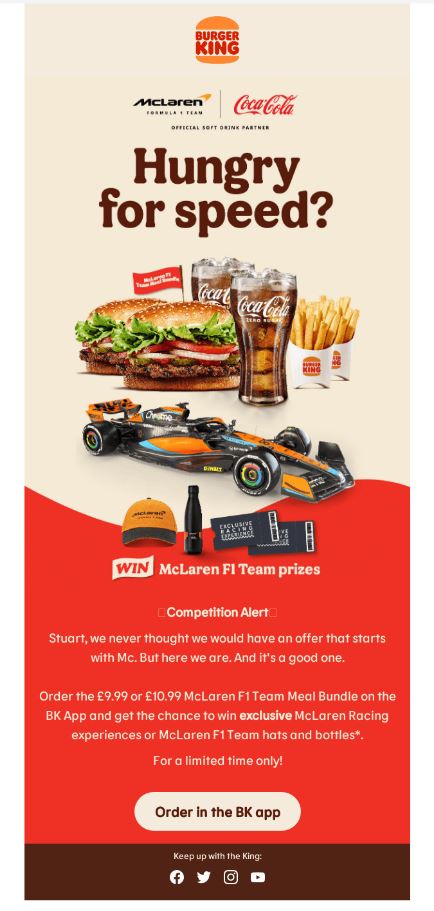
One of the most effective ways to boost engagement is by incorporating interactive content into email campaigns. By making emails more dynamic, restaurants can captivate their audience’s attention, leading to higher click-through rates. Here are a few ideas:
- Polls and Surveys: Encourage feedback by asking customers to participate in polls or surveys. This not only gives insights into customer preferences but also makes them feel involved in the restaurant’s journey.
- Quizzes: Create fun quizzes related to food or beverage pairings that lead to personalized recommendations—”What’s Your Perfect Pasta?” could engage diners and promote menu items.
- Animated GIFs or Videos: Use eye-catching visuals or short videos to showcase special events, chef interviews, or new dishes. This keeps content lively and encourages sharing.
Imagine receiving an email from a local bistro with a quiz that determines your ideal dish based on your flavor preferences. Not only does this engage the customer, but it also encourages them to make a reservation based on their results!
Consistent Messaging and Timing
Another vital component of maximizing engagement is ensuring consistent messaging and optimal timing. Building a rapport with customers requires regular communication without overwhelming them. Some best practices include:
- Establish a Rhythm: Send emails consistently (such as weekly or monthly) to keep the restaurant top-of-mind for customers while ensuring not to saturate their inboxes with irrelevant content.
- Embrace Automation: Utilize automation tools to send timely emails for specific occasions—like reservations confirmations, reminders for upcoming events, or follow-ups thanking customers for their recent visit.
For example, a bakery might send out a Saturday morning email with a reminder about breakfast specials, enticing customers to stop in before their weekend errands.
In conclusion, maximizing engagement through email campaigns requires a combination of interactive content, consistent messaging, and strategic timing. By capturing customers’ attention and providing valuable experiences, restaurants can transform casual diners into enthusiastic patrons, eagerly waiting for the next delightful email to land in their inbox. This not only enhances customer loyalty but also positions the restaurant as a go-to destination in their dining choices.