

Introduction to SEO
What is SEO?
Search Engine Optimization, commonly known as SEO, is the practice of enhancing a website’s visibility in search engines like Google. It involves a series of strategies aimed at improving both the quantity and quality of website traffic. Essentially, SEO is about getting your content to rank higher in search engine results, making it easier for users to discover your website organically.
Imagine you’re searching for the best pizza place in town. You type “best pizza near me” into Google, and a list of options pops up. These results aren’t random; they are influenced by SEO tactics that help search engines understand which pages to display based on relevance, authority, and user experience.
Importance of SEO for Websites
Now, why is SEO crucial for websites? Here are a few key reasons:
- Increased Visibility : Enhanced visibility means more organic traffic. Higher rankings lead to more clicks.
- Cost-Effective Marketing : Unlike paid ads, the traffic gained through SEO is free, making it a sustainable option in the long run.
- User Experience : SEO often focuses on user-friendly designs, improving the overall experience for visitors.
To put it simply, effective SEO can transform a website from being virtually invisible to a thriving hub of activity. Remember the last time you found a great service simply by searching for it online? That’s the power of SEO at work!

Understanding Search Engine Algorithms
How Search Engines Work
Once a website is optimized for search engines, it’s essential to understand how these engines actually work. Search engines like Google use complex algorithms to crawl and index vast amounts of information on the web.
Think of an engine as a highly skilled librarian. Just as a librarian sorts books based on topics and relevance, search engines gather web pages and determine how relevant they are to a user’s query. Here’s a simplified breakdown of this process:
- Crawling : This is the process where search engines send out bots (also known as spiders) to discover new or updated content.
- Indexing : After crawling, the search engine organizes and stores this content in its database, creating an index.
- Ranking : When a user types in a query, the search engine retrieves data from its index and ranks it to present the most relevant results.
Factors that Influence Search Rankings
Several factors influence how well a website ranks on search engines. Understanding these can significantly enhance your SEO strategy:
- Relevance : The content must match the user’s intent.
- Quality and Authority : Higher quality and authoritative content ranks better.
- User Experience : Easy navigation and fast loading times boost rankings.
- Backlinks : Links from reputable sites signify trustworthiness.
For instance, after launching a small online shop, the owner noticed a spike in web traffic after improving their product descriptions and enhancing site speed, illustrating how these factors directly impact search performance.
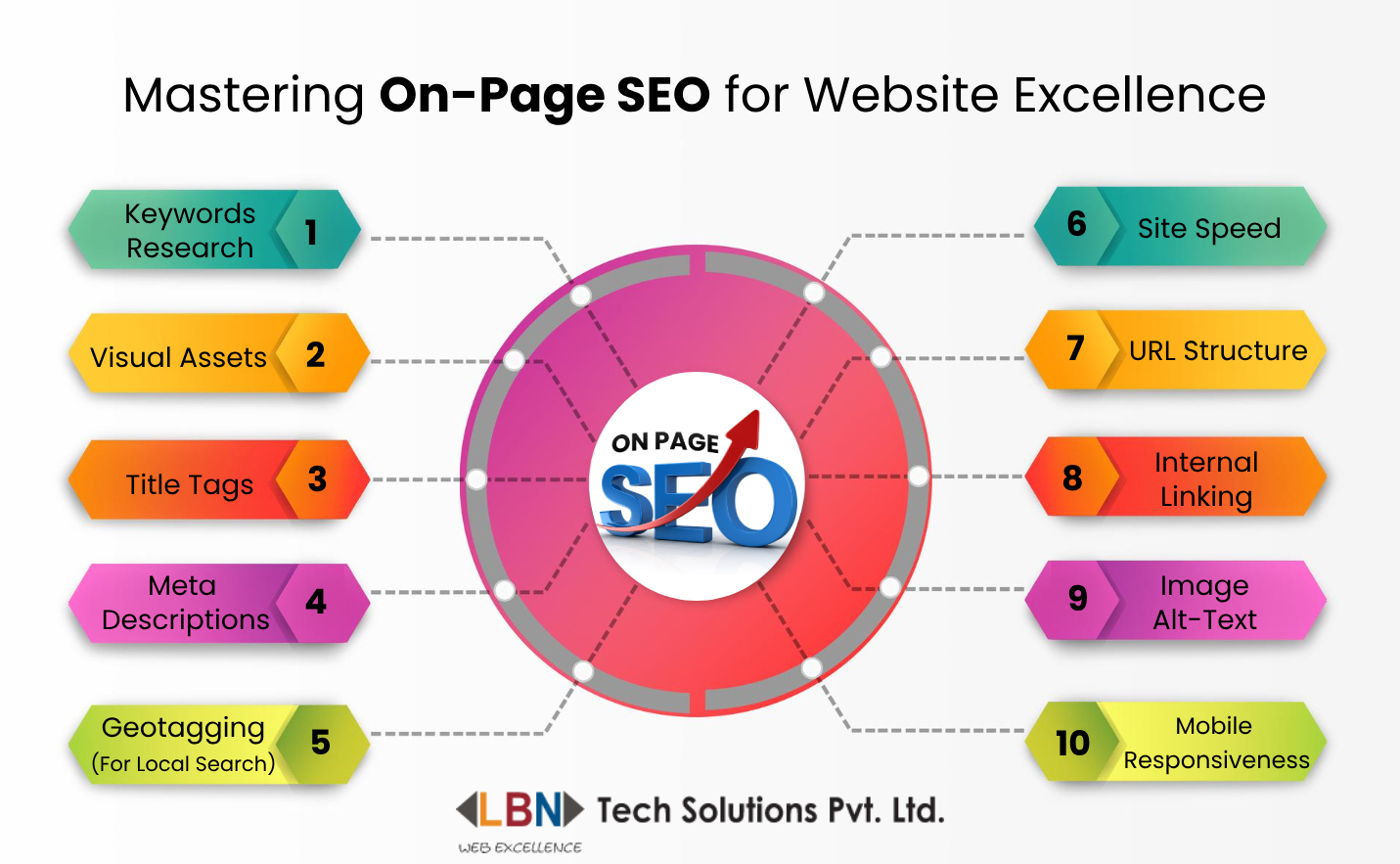
On-Page Optimization Techniques
Keywords and Metadata
As we dive deeper into SEO, on-page optimization techniques play a crucial role in enhancing a website’s visibility. One of the foundational elements of this process is using keywords and metadata effectively. Keywords are the phrases that users type into search engines, and integrating them into a website’s content helps search engines understand what it’s about.
Here’s how to get it right:
- Keyword Research : Start by identifying relevant keywords for your niche using tools like Google Keyword Planner or SEMrush.
- Placement : Incorporate keywords naturally in titles, headings, and within the content.
- Metadata : Don’t overlook metadata—this includes the title tag and meta description. These should contain your primary keywords and provide a clear summary of the page.
For example, a blog post about healthy recipes titled “Nutritious Dinner Ideas for Busy Families” not only is keyword-rich but also immediately informs readers of its content.
Content Optimization Strategies
Once you have your keywords and metadata sorted, focus on content optimization strategies. High-quality content is invaluable for attracting and retaining visitors. Here are some strategies:
- Engaging Headings : Use clear, captivating headings to guide readers through your content.
- Readability : Break up text with bullet points and images to enhance readability.
- Internal Linking : Refer to other relevant pages within your site to keep visitors engaged and improve site structure.
A personal example: after applying these strategies to a travel blog, the author saw a significant increase in time spent on the page and decreased bounce rates, proving that effective content optimization resonates with readers and search engines alike.

Off-Page Optimization Strategies
Link Building Tactics
Transitioning from on-page optimization, let’s explore off-page strategies that can significantly boost your website’s performance, starting with link building. This practice involves acquiring hyperlinks from other websites to your own. Think of links as votes of confidence; the more reputable sites that link to yours, the more authority your site will have in the eyes of search engines.
Here are a few effective link-building tactics:
- Guest Blogging : Write articles for popular blogs in your industry and include a link back to your site.
- Content Marketing : Create high-quality content, like infographics or comprehensive guides, that others naturally want to link to.
- Networking : Build relationships with other bloggers and website owners to encourage mutual linking.
For instance, after a travel blogger published a guest post on a major travel site, they gained a significant number of backlinks, which improved their search ranking rapidly.
Importance of Social Signals
Equally essential in off-page SEO are social signals, which refer to how often your content is shared and engaged with on social media platforms. While they may not be direct ranking factors, strong social engagement can amplify your content’s reach and indirectly improve your SEO efforts.
Consider these points on social signals:
- Content Sharing : Create shareable content that resonates with your audience to encourage sharing.
- Engagement : Regularly interact with your followers to foster community and loyalty.
- Visibility : Use social media to promote your content and drive traffic back to your site.
In my experience, a well-timed social media campaign can generate a surge of traffic and backlinks, giving a significant boost to the website’s authority and search ranking. By employing effective link-building tactics and harnessing the power of social media, businesses can significantly enhance their online presence.
Technical SEO Best Practices
Website Speed and Performance
Having covered off-page strategies, let’s delve into the essential technical SEO best practices, starting with website speed and performance. Did you know that a one-second delay in page loading time can lead to a 7% decrease in conversions? Speed matters immensely; users expect instant access to information.
To enhance your site’s speed, consider implementing the following:
- Optimize Images : Compress images and use formats like WebP to reduce loading times without sacrificing quality.
- Leverage Browser Caching : This allows your website to store some data locally on users’ devices, speeding up future visits.
- Minify CSS and JavaScript : Reduce the size of your code by removing unnecessary spaces and comments, which can enhance performance.
For instance, after a recent website audit, a local business improved their loading time from 6 seconds to 2 seconds, resulting in a noticeable uptick in user engagement.
Mobile Optimization and Responsiveness
As we shift focus, mobile optimization is another critical aspect of technical SEO. With more users accessing websites via smartphones, having a mobile-responsive design is non-negotiable.
Here’s how to ensure your site is mobile-friendly:
- Responsive Design : Use CSS media queries to adapt your layout to various screen sizes, ensuring a seamless experience.
- Touch-Friendly Elements : Make buttons large enough for easy tapping and avoid placing links too close together.
- Test on Multiple Devices : Regularly check how your site appears on different smartphones and tablets to ensure consistent performance.
A personal anecdote: when a friend redesigned her storefront website to be mobile-responsive, she saw a 40% increase in mobile traffic and engagement. This shows how crucial mobile optimization is in reaching and retaining today’s audience. By prioritizing website speed and mobile responsiveness, businesses can ensure they meet users’ expectations and stay ahead in the competitive online landscape.

Local SEO Strategies
Google My Business Optimization
Transitioning into local SEO strategies, let’s start with one of the most impactful tools available: Google My Business (GMB). This free tool allows businesses to manage their online presence on Google, making it crucial for local visibility. Optimizing your GMB listing can significantly enhance your chances of appearing in local search results.
To effectively optimize your GMB listing, consider these tips:
- Complete Your Profile : Fill out every section, including business name, address, phone number, and website.
- Use High-Quality Images : Upload professional photos of your business, products, and services. Visual content can attract more potential customers.
- Gather Reviews : Encourage satisfied customers to leave positive reviews, which can build trust and enhance your ranking.
When a café owner I know optimized their Google My Business profile, they noticed a 50% increase in foot traffic in just a few months, showcasing the power of having an optimized GMB listing.
Local Citations and Listings
Next, let’s discuss local citations and listings. These are online references to your business’s name, address, and phone number (NAP) across various platforms. Consistency is key here; discrepancies can confuse search engines and negatively affect your rankings.
Here are some strategies to improve your local citations:
- Submit to Local Directories : List your business in popular online directories like Yelp, Yellow Pages, and local Chamber of Commerce sites.
- Ensure NAP Consistency : Regularly audit and update your listings to maintain uniformity across all platforms.
- Utilize Local SEO Tools : Tools like Moz Local can help manage and track your business listings efficiently.
By maintaining accurate and consistent local citations, you enhance your business’s credibility and search engine visibility. A small landscaping business I consulted with saw their website traffic double after correcting inconsistent NAP information across various directories, proving the effectiveness of proper local SEO practices. By embracing these strategies, businesses can build a stronger local presence and connect more effectively with their community.

Ecommerce SEO Tips
Product Page Optimization
Building on the local SEO strategies we just discussed, let’s shift focus to ecommerce SEO, a vital area for online retailers looking to boost visibility and sales. One of the most critical elements in this domain is product page optimization. Well-optimized product pages can significantly enhance search visibility and user engagement.
Here are some effective tips for optimizing product pages:
- Unique Product Descriptions : Avoid using manufacturer descriptions. Instead, create compelling and unique descriptions that highlight the benefits and features of your products.
- High-Quality Images : Use clear, high-resolution images from multiple angles. Consider adding a zoom feature to improve customer experience.
- SEO-Friendly URLs : Keep your URLs simple and descriptive. For example, use “example.com/product-name” rather than “example.com/12345”.
When a friend revamped her online clothing store’s product pages with detailed descriptions and quality images, she saw a noticeable increase in conversions—proof that the right optimizations can make a huge difference.
Schema Markup Implementation
Next, let’s discuss schema markup implementation, another essential aspect of ecommerce SEO. Schema markup is a type of microdata that helps search engines understand the content on your site better, leading to richer search results that can attract more clicks.
Here’s how to implement schema markup effectively:
- Use Product Schema : Add structured data for your products, including name, image, price, and availability. This can display rich snippets in search results.
- Leverage Review Schema : Implement schema markup for product reviews to display star ratings, which can enhance click-through rates.
- Testing Tools : Utilize Google’s Structured Data Testing Tool to ensure your schema is correctly implemented.
For instance, an ecommerce site I consulted added schema markup to their product pages, resulting in eye-catching star ratings in search results. This small tweak brought in a significant traffic boost and more sales. By focusing on product page optimization and schema markup, ecommerce businesses can improve visibility and create a better shopping experience for customers.

Measuring SEO Success
Key Performance Indicators (KPIs)
Transitioning from ecommerce strategies, it’s crucial to understand how to measure your SEO success effectively. This is where Key Performance Indicators (KPIs) come into play. KPIs are measurable values that demonstrate how effectively a company is achieving its SEO objectives. Choosing the right KPIs can help clarify the progress of your SEO efforts.
Here are some important KPIs to track:
- Organic Traffic : Monitor the number of visitors arriving at your site through organic search.
- Keyword Rankings : Track how well your targeted keywords are performing over time.
- Bounce Rate : Analyze the percentage of visitors who leave after viewing only one page, which can indicate content relevance.
- Conversion Rate : Measure how many visitors complete desired actions, such as purchases or sign-ups.
For instance, after implementing an SEO strategy, a small business owner noticed a considerable increase in organic traffic and a reduced bounce rate, signaling that their content was resonating well with users.
Tools for Tracking SEO Metrics
Once you’ve identified your KPIs, using the right tools to track these metrics becomes essential. Several tools can simplify this process:
- Google Analytics : Offers in-depth insights into traffic sources, user behavior, and conversions.
- SEMrush : Great for monitoring keyword rankings, backlinks, and competitive analysis.
- Ahrefs : Provides extensive data on site health, keyword performance, and backlink profiles.
For example, a client of mine started using Google Analytics to track their organic traffic. With the data, they identified that certain blog posts were driving significant traffic, leading them to create more similar content. In the end, measuring SEO success with the right KPIs and tools not only informs strategy adjustments but can ultimately lead to improved performance and increased conversions.

Common SEO Mistakes to Avoid
Keyword Stuffing and Unethical Practices
As we springboard from measuring SEO success, it’s essential to discuss common mistakes that can undermine your efforts. One of the most prevalent pitfalls is keyword stuffing, where webmasters overload their content with keywords in an attempt to manipulate search rankings. While it might seem like a quick fix, search engines are smarter than that and can penalize websites for this approach.
Avoid these practices:
- Overusing Keywords : Instead of jamming keywords into your content, focus on natural, meaningful placement.
- Hidden Text : Some may try hiding keywords within the same color as the background. This is unethical and can lead to penalties.
- Duplicate Content : Using the same content across multiple pages dilutes your SEO value. Always strive for unique, quality content.
A friend once tried keyword stuffing to boost his blog’s visibility. While he saw a brief spike in traffic, his site was eventually penalized, costing him rankings he had worked hard to achieve.
Neglecting Website Security and Updates
Another critical mistake to avoid is neglecting website security and regular updates. A secure website not only provides peace of mind to visitors but also signals trustworthiness to search engines.
Key security measures include:
- SSL Certification : Implement HTTPS to protect the integrity and confidentiality of data.
- Regular Updates : Keep your CMS, plugins, and themes regularly updated to avoid vulnerabilities.
- Backup Solutions : Regularly back up your site to prevent data loss in case of an attack.
For instance, a local business I worked with skipped important updates for their website and faced a security breach, leading to lost customer data and trust. This was a costly error that could have been avoided with consistent maintenance. By steering clear of these common SEO mistakes, you can build a stronger foundation for your online presence and enhance your overall success.
Future Trends in SEO
Voice Search Optimization
Moving forward from common SEO mistakes, it’s essential to look ahead at future trends that will shape the landscape of search engine optimization. One significant trend is voice search optimization. With the rise of smart speakers and virtual assistants like Siri, Alexa, and Google Assistant, more people are using voice commands for their search queries.
To prepare for this shift, consider these strategies:
- Conversational Keywords : Optimize your content for natural language queries, often posed in the form of questions. For example, instead of “best pizza,” think “What is the best pizza place near me?”
- Local SEO Importance : Since many voice searches are location-based, ensure your local SEO strategies, like optimized Google My Business profiles, are in place.
- Featured Snippets : Aim for featured snippets, as these are often the results read aloud by voice assistants.
A local restaurant I know began optimizing their content for voice search and noticed an uptick in reservation inquiries from people using voice searches on their mobiles—proof that this trend is gaining traction!
AI and Machine Learning in Search Algorithms
Another trend set to shape SEO is the increasing role of AI and machine learning in search algorithms. Tech giants like Google are utilizing advanced algorithms to improve search relevance and user experience.
To adapt to this change, consider the following:
- Focus on Quality Content : With AI-driven algorithms prioritizing user engagement, high-quality, in-depth content will be favored over keyword-stuffed articles.
- User Experience Signals : Algorithms increasingly assess user experience metrics such as dwell time and page loading speed. Make these a priority in your optimization strategies.
- E-A-T Principles : Emphasize Expertise, Authoritativeness, and Trustworthiness (E-A-T) in your content, as these are becoming crucial indicators for search engines in determining the quality of your site.
In my experience, a tech blog that adopted an in-depth, user-focused approach found a marked improvement in their rankings as search engines favored their thoughtfully produced content.
By staying abreast of these future trends, businesses can position themselves to leverage upcoming changes in SEO, ensuring they remain competitive in the ever-evolving digital landscape.